Latest Posts

Denny’s New Pancake Rebrand: Food Porn or Something More?

Last week, Denny’s served up something new. Seeking to answer the consumer desire for fresher and better tasting products (supposedly led by millennial eaters), America’s Diner switched from stacks of limp, just-add-water pancakes to: “New! Buttermilk pancakes that are made with “good stuff like fresh buttermilk, real eggs, flour and a hint of vanilla.” The result is purportedly “50% fluffier pancakes” that “just might be better than home.”

We’re likely to see many more real-food recipe re-dos as companies seek to reinvent themselves in a changing marketplace. Mark Cotter, CEO of consulting firm The Food Group warns, “If these companies do not modify what they put in their products … these brands will slowly die.”[i] These rebranding efforts endeavor to capitalize upon shifting definitions of cultural concepts like “good food,” “realness,” and “freshness.” These efforts also take on a particular look and feel.

Three years in the making, the Denny’s recipe switch is supplemented by a highly styled aesthetic. It’s a look replete with the overhead shots and grainy wood backgrounds so often grammed, pinned, and tweeted in foodie rituals of digital conspicuous consumption.

Screen Shot 2016-07-17 at 11.06.23 AM

From the Denny’s website

Denny’s website also features a food pornographic “Pancake Experience,” which you can (and should) view here. Each of Denny’s new “real” ingredients makes a special appearance in the video loop. The Experience begins with a shot of buttermilk seductively crashing into flour that quickly cuts to a whisk being drawn through thick batter and to a close-up of a pancake on a griddle, plumping to a state of doneness.

PancakeExperience1

From the Denny’s website

In subsequent shots, pancakes fall from above only to bounce with a carb-y springiness into a perfectly positioned pile, before syrup drizzles down the stack.

PancakeExperience2

From the Denny’s website

What does it mean for Denny’s to become a producer of food porn?

Molly O’Neil defined food porn as, “prose and recipes so removed from real life that they cannot be used except as vicarious experience.”[ii] Anne McBride similarly argues that food porn “generally evokes the unattainable” and emphasizes surface appearances.[iii] Gooey, graphic close-ups, sensuous slow pans, and bright-yet-softly-lit shots each frame food with a gaze that both worships and objectifies.

Also typical of food porn is the absence and invisibility of labor, time, and mess. Even when food bloggers include step-by-step recipe instructions and accompanying photographs, they closely control and curate the material processes. As Tisha Dejmanee argues in her study of food blogs, “The result is a cake that seemingly frosts itself, pairing the abundance and excess of food blogs with a seemingly effortless, immaterial productivity.”[iv] Dejmanee rightly argues that this has gendered implications: “In this mode of representation, ‘new’ media adopt ‘old’ values, repeating a long history of erasing the material investments and tedious feminized labor of food preparation.”[v]

PancakeExperience3

The concluding “food porn” shot of Denny’s “Pancake Experience.” Image from the Denny’s website

This visible, but highly compressed depiction of food labor is a food media trend unto itself—like Tasty videos, sub-one-minute clips that depict cooking as blissfully mindless entertainment at warp speed. Produced by Buzzfeed Motion Pictures, Tasty’s Facebook page has nearly 65 million likes and the videos have been viewed billions of times. Dayna Evans quips in New York Magazine that these videos:

tap into the pleasure center of my brain with their mesmerizing simplicity, lack of fussiness, and quick pace. They make cooking seem painless, sedative. In a sea of free-flowing content … Tasty videos act as calming one-minute meditations.

Denny’s achieves a similarly meditative pornification of food and labor in its Pancake Experience. Even if it weren’t on a loop, it’s sure to garner repeat views, which is part of the ongoing debate about food porn and the social work it does, and does not, perform.

In the case of Denny’s, recipe revision and the inclusion of more whole food ingredients are new and laudable steps for a diner franchise to take, but they’re rendered somewhat apolitical by the glossiness of the food porn approach. The consumers who desire “real food”—who marketers are so eager to decode—also seek justice on a plate. “Real” ingredients are just one part of an eating equation that also includes attention to how food is grown, processed, and distributed, as well as to the hands, lives, and experiences of those who craft these ingredients into meals—pancakes or otherwise.

That said, my husband and I put Denny’s pancake-porn-driven rebranding to the test this weekend. We found that the pancakes are indeed fluffy, if a touch undercooked, but still yummy enough that “all you can eat” seemed an exhilarating proposition. And at a value menu price, these are “real” pancakes that many more consumers are likely to be able to afford. Perhaps we shouldn’t dismiss these “real” ingredient makeovers too quickly.

In her plea for culinary modernism, Rachel Laudan encourages us to resist the ahistorical nostalgia of culinary Luddism, which judges every product of the industrial food system as inadequate, morally corrupt, and loathsome. “Real,” “fresh” buttermilk pancakes might be a first, small step toward the high quality, affordable, and just industrial food system that Laudan encourages us to demand.

Could a better industrial food system start somewhere like Denny’s?


Notes

[i] Hadley Malcom, “Meet Denny’s Newest Breakfast Wars Weapon,” USA Today, July 12, 2016.

[ii] Molly O’Neil, “Food Porn,” Columbia Journalism Review, 23 October 2003.

[iii] Anne McBride, “Food Porn,” Gastronomica: The Journal of Food and Culture 10 (2010) 1, 38.

[iv] Tisha Dejmanee, “’Food Porn’ as Postfeminist Play: Digital Femininity and the Female Body on Food Blogs,” Television & New Media (2015), 16.

[v] Dejmanee, 16-17.


Header photo credit: Emily Contois, 2016

About

My research explores the connections between food, the body, health, and identities in contemporary U.S. media and popular culture. I’m Associate Professor of Media Studies at The University of Tulsa, author of Diners, Dudes and Diets: How Gender and Power Collide in Food Media and Culture (UNC Press, 2020), and co-editor of Food Instagram: Identity, Influence, and Negotiation (University of Illinois Press, 2022). My current book project explores how ideas about elite athleticism have infiltrated everyday American life.


About Me

I was born in Australia and grew up in the Big Sky Country of Montana. After spending a bit more than a decade training in classical ballet, I turned my attention to the study of food, health, and culture. That journey started during my undergraduate studies at the University of Oklahoma and continues to this day.

Trained as an interdisciplinary researcher and teacher, I work primarily at the intersection of media studies, food studies, gender studies, and American studies, but my work also engages the history of medicine, critical nutrition studies, and fat studies. I completed my PhD in American Studies at Brown University in 2018 and hold three master’s degrees: an MA in American Studies from Brown, an MLA in Gastronomy from Boston University, and an MPH focused in Public Health Nutrition from UC Berkeley.

In addition to my academic training, I worked for five years in worksite wellness, supporting program development, project management, and marketing and communications. I’ve written about my professional experience in public health nutrition here, and now work to incorporate translational and transdisciplinary approaches into my scholarship and teaching, such as my course “Critical Media Studies of Health and Medicine.”

I have published articles in Gastronomica: The Journal of Critical Food Studies, Feminist Media Studies, and American Studies, among several others. My work has been covered in a number of media outlets including The New York Times, The Washington Post, The Wall Street Journal, Salon, and Vox. A public expert on a wide variety of topics, I’ve written about the politics of meat for NBC News, trophy kitchens for Jezebeland millennial male body image for Culture Study. I’ve also been on podcasts like GastropodExtra SpicyBBC Food Chain, and Food Psych, and appeared on CBS This Morning, BBC Ideas, and on Ugly Delicious with David Chang on Netflix. Dedicated to public scholarship, I also write for Nursing Clio, blog here, and am active on social media.

I currently live in Tulsa with my husband (who’s a rock star physical therapist, athlete, and inspiration for some of my writing) and our rescue pup, Ruby.


About This Site

Since July 2012, this website has been a place for some of my finished work (like this essay on Montana food culture), as well as projects that are in process or ideas that are just rumbling around in me, like why Budweiser’s summer 2016 America rebrand matters or what Star Wars has to do with Edward Hopper’s food paintings.

It’s also become a place to share academic learnings and advice, such as how to write a winning statement of purpose, get the most out of academic conferences, get started on Twitter, or publish in food studies journals.

It’s a space where I reflect upon teaching, including my Food Media course, and class projects like Unessays and Infographics.

I also use the blog to reflect upon and share more broadly my own learnings from the conferences and events that I attend, like these write ups from the 2019 Association for the Study of Food and Society Conference, the 2019 Southern Foodways Alliance field trip to Bentonville, and the 2017 Reading Historic Cookbooks seminar taught by Barbara Wheaton at the Radcliffe Institute at Harvard University.

No matter what you’re here to read, please feel free to comment and engage—and know you’re most welcome to contact me if you’d like to discuss anything further.

SaveSave

SaveSave

Association for the Study of Food and Society 2016: A Debrief

Food studies presentations, roundtables, workshops, kitchen labs, field trips, tastings, exhibits, posters, dine arounds — the Association for the Study of Food and Society (ASFS) offered all this and more at University of Toronto Scarborough. Drawing more than 550 registrants from around the world, this year’s meeting was especially dynamic, involving ASFS along with Agriculture, Food and Human Values Society and Society for the Anthropology of Food and Nutrition — and for the first time, the Canadian Association for Food Studies.

University of Toronto Scarborough — and its students, faculty, community, and scholarship — each embodied the conference theme: “Scarborough Fare: Global Foodways and Local Foods in a Transnational City.” Take for example SALT, a mobile resource developed by the Culinaria Research Centre at UTSC for not only finding tasty eats, but learning more about Scarborough’s immigrant communities. Or check out the digital food studies project, “Mapping Scarborough Chinatown.” And if you’re in Toronto, Culinaria’s teaching kitchen laboratory; the Philippine Food Exhibit sponsored by the Philippine Consulate General of Toronto, Canada; and the Place Settings: Diasporic Food Identities exhibit at the Doris McCarthy Gallery are all not to be missed.

No blog post could summarize the richness of this conference, but check out #foodstudies2016 on Twitter, read Janis Thiessen’s blog post summary here, and below are several Storify stories for panels that I particularly learned from and enjoyed — admittedly, shamelessly including my own panel in the mix:

The next ASFS/AFHVS conference will take place at Occidental College in Los Angeles in June 2017. I hope to see you there!

Photo credits: Emily Contois, 2016 

The Dietary Innovation & Disease Conference: A Debrief

Last week, I presented at a history of nutrition conference that took place on San Servolo, a small island about a ten minute boat ride off of Venice that for more than two hundred years housed an asylum.

San Servolo proved a most fitting and inspiring setting for the Dietary Innovation and Disease in the 19th and 20th Centuries conference. We heard the lapping waters of the Venice lagoon, felt its cool breezes, and even saw a cruise ship or two pass by, all while listening to thought-provoking paper presentations at an academic conference.

Co-organized by David Gentilcore and Matthew Smith, the well-executed event brought together thirty scholars from across the world, all working to unpack today’s nutrition issues through the study of dietary innovation and health in the past.

As for me, I presented some of my new work on Fairlife milk, an “ultra-filtered” lactose-free milk with more protein and calcium and less sugar than “ordinary milk,” that just so happens to be distributed by Coca-Cola.

Fairlife is a textbook example of what Gyorgy Scrinis calls “functional nutritionism,” in which the food industry seeks to sell products reductively through the emphasis of nutrients — not to promote good health, but to maximize and enhance it. Inspired by E. Melanie DuPuis’ history of milk, I’m also fascinated by the beverage’s transformation throughout American history from “white poison” to “nature’s perfect food” and seek to push this trajectory further to products like Fairlife — foods that aspire and claim to be “better than nature.”

I examine this evolution through a study of milk’s national advertising campaigns and situate the concept of nutritionism within a deeper socio-cultural context, considering the roles of gender and age, constructions of nature and natural, and how the contemporary meaning of milk is forged at the intersection of popular culture and nutrition science.

You can view the key points of my talk — and all the other fascinating presentations — in the Storify that I compiled here, and the conference program here.

And here are a few photos of Venice and San Servolo because I just can’t help myself. I studied abroad in Italy in summer 2005 while a student at the University of Oklahoma, and this was my first time to return. I can’t wait for my next trip.

 Photo Credits: Emily Contois, 2016 

Publishing in Food Studies Journals: An Index

Food studies is an ever-expanding field with an increasing number of discipline specific and related peer-reviewed journals. As you seek out the right “home” for your food studies scholarship, consider this list of peer-reviewed publications, organized alphabetically.

Please note that this list was originally compiled in June 2016 and all links were updated in September 2019. The last update was made in June 2021. I endeavor to keep the list up-to-date, adding journals as folks alert me to them, but if you find something amiss, please feel free to comment or send me a note! 

Agriculture and Food Security is an open-access journal that addresses global food security with a particular focus on research that may inform more sustainable agriculture and food systems that better address local, regional, national and/or global food and nutritional insecurity. The journal considers contributions across academic disciplines, including agricultural, ecological, environmental, nutritional, and socio-economic sciences, public health, and policy.

Agriculture and Human Values is the journal of the Agriculture, Food, and Human Values Society. The journal publishes interdisciplinary research that critically examines the values, relationships, conflicts, and contradictions within contemporary agricultural and food systems. It also addresses the impact of agricultural and food related institutions, policies, and practices on human populations, the environment, democratic governance, and social equity.

Agroecology and Sustainable Food Systems publishes articles aimed at creating the alternative food systems of the future, such as developing alternatives to the complex problems of resource depletion, environmental degradation, narrowing agrobiodiversity, continued world hunger, consolidation and industrialization of the food system, climate change, and the loss of farm land. The journal publishes interdisciplinary and transdisciplinary articles, as well as book reviews, dialogue (positions, opinions, commentary, and editorials), and topical reviews.

Anthropology of Food is an open access, multilingual (French, English, Spanish and Portuguese), academic webjournal dedicated to food from a social science perspective. Published since 1999, issues are edited by an international network of academics.

Appetite is an international research journal specializing in cultural, social, psychological, sensory, and physiological influences on the selection and intake of foods and drinks. It covers normal and disordered eating and drinking and features studies of both human and non-human animal behaviour toward food. Appetite publishes research reports, reviews and commentaries.

British Food Journal publishes empirical and applied research articles, viewpoint articles, case studies, and reviews related to the food industry. Published for more than a century, the journal publishes on topics including consumer choice and attitudes, marketing and retailing, food-related health education, the food supply and safety, and sustainability.

Canadian Food Studies / La Revue canadienne des études sur l’alimentation is the open-access, online journal of the Canadian Association for Food Studies. Addressing the myriad ways in which humans, food, and the natural and built environments come to construct one another, the journal aims to build a body of voices and material that represents the community, academic, and individual contexts of food studies, with the potential of integrating ideas on transgression, emergence, and transformation.

CuiZine: The Journal of Canadian Food Cultures is an e-journal published in English and French by McGill Library. With a core audience of “readers interested in Canada’s diverse food culture,” research articles precede a veritable feast of food-themed original poetry, animations, cartoons, image-based essays, reminiscences, short studies on iconic Canadian dishes or products, short opinion-editorial pieces, food-related exhibit reviews, and interviews.

Culture, Agriculture, Food and Environment is published two times a year by the Culture and Agriculture Section of the American Anthropological Association. It publishes position papers, discussions of theoretical developments and methods of inquiry, results of empirical research, and book and film reviews. With an interdisciplinary readership, the journal explores the connections between culture and the environment, ecology, agriculture, aquaculture, fisheries, natural resources, energy, water, food, and nutrition, as well as sustainability and biodiversity.

Digest: A Journal of Foodways & Culture, the online journal of the Foodways section of the American Folklore Society, publishes articles, as well as research notes: folklore food-related fieldwork projects or reports that are part of a larger project and not subject to peer review. Digest also serves up an “Amuse-Bouche” section, which includes a variety of shorter pieces, such as creative writing, pieces of fiction, poetry, photographs and photographic essays, recipes, and historical materials, such as prints and menus.

Ecology of Food and Nutrition is an international journal that publishes articles on the ecological, biological, and cultural aspects of food and nutrition. The article content scope is wide, including the relationship between food/nutrition and culture, food taboos and preferences, ecology and political economy of food, the evolution of human nutrition, changes in food habits, food technology and marketing, food and identity, food sustainability, and food, health, and disease.

European Journal of Food, Drink and Society is a critical and interdisciplinary space to discuss and debate contemporary and historical issues of food and drink in everyday life, founded in 2020. It encompasses the fields of sociology, history, cultural studies, geography, anthropology, tourism studies, and culinary arts. The Journal publishes peer-reviewed articles, policy and practice contributions, high quality work related to innovative practice in food studies education, research notes, and solicited book reviews.

Food, Culture & Society is the quarterly, multidisciplinary journal of the Association for the Study of Food and Society and has been published since 1996. The journal explores the complex relationships among food, culture, and society from numerous disciplines in the humanities, social sciences, and sciences, as well as in the world of food beyond the academy.

Food and Foodways is a quarterly, interdisciplinary, and international journal that publishes original scholarly articles on the history and culture of human nourishment. Its scholarship explores the powerful but often subtle ways in which food has shaped and shapes our lives socially, economically, politically, mentally, nutritionally, and morally.

Food & History is the biannual scientific review of the European Institute for the History and Culture of Food in Tours, France. Founded in 2003, it was the first journal in Europe dedicated to food history. It addresses questions of consumption, production, provisioning and distribution, medical aspects, culinary practices, gastronomy, and restaurants. Although most contributions are concerned with European food history, the journal also welcomes articles on other food cultures.

Food Quality and Preference is a journal dedicated to sensory and consumer research in food. It is an official journal of the Sensometric Society and the European Sensory Science Society. Submissions must include some aspect of human measurement. The journal’s coverage includes topics such as food choice studies of cultural, sensory, and environmental factors; studies of how geographical, cultural, and individual differences shape food perception and preference; innovative consumer and market research; and health and wellbeing studies.

Food Policy is a multidisciplinary journal that publishes original research and critical reviews that make a clear contribution to food policy debates of international interest. Relevant issues include: food production, trade, marketing and consumption; nutrition and health aspects of food systems; food needs, entitlements, security and aid; food safety and quality assurance; technological and institutional innovation affecting food systems and access; and environmental sustainability.

Food Security: The Science, Sociology and Economics of Food Production and Access to Food publishes original research papers that take a synthetic view of the science, sociology and economics of food production, agricultural development, access to food, and nutrition, as well as review articles, case studies, and letters to the editor. It is an official publication of the International Society for Plant Pathology.

Food Studies: An Interdisciplinary Journal provides an interdisciplinary forum for the discussion of agricultural, environmental, nutritional, health, social, economic, and cultural perspectives on food. Published since 2011, articles range from broad theoretical and global policy explorations to detailed studies of specific human-physiological, nutritional, and social dynamics of food. (Note: This has been flagged by colleagues as a potential pay-to-publish, i.e. predatory, journal.)

Future of Food: Journal on Food, Agriculture and Society is a multi-disciplinary journal for young practitioners, policy-makers, young scholars, researchers, post graduate students, doctoral students, and post doctoral fellows who are interested in food related themes. Inviting scholarship from natural and social scientists, it is sponsored by The Department of Organic Food Quality and Food Culture at the University of Kassel, Germany and the Federation of German Scientists.

Gastronomica, “The Journal of Critical Food Studies,” builds upon an established history of bridging the divide between academic publishing, foodie-friendly journalism, and high-art aesthetics. Specializing in “translational” work that speaks to multiple audiences, the quarterly-published journal features original research, as well as research briefs, critical commentaries and discussions, reviews of books and films, creative reflections, photo-essays, interviews with key figures in the field, and aesthetic pieces pertaining to food.

Global Food History publishes twice per year original articles covering any period from prehistory to the present and any geographical area, including transnational and world histories of food. Publishing its first issue in 2015, the journal also welcomes articles on teaching food history, archival notes, translations, and other essays that help to build the field by encouraging and disseminating documentation.

Global Food Security publishes papers that contribute to a better understanding of the economic, social, biophysical, technological, and institutional drivers of current and future global food security. It publishes reviews and synthesis articles about research on food availability, access, nutrition, safety, sanitation, stability, and environment.

Graduate Journal of Food Studies is an international student-run journal dedicated to encouraging and promoting interdisciplinary food scholarship at the graduate level. Publishing two digital issues per year since 2014, the journal is a space for promising scholars to showcase their exceptional academic articles and book reviews, as well as features like research and field notes, archival reports, close readings, and photo essays.

Hospitality & Society is an international multidisciplinary social sciences journal focusing upon hospitality and exploring its connections with wider social and cultural processes and structures. Published since 2011, the journal publishes empirical and conceptual research, state-of-the-art reviews, discussion papers, shorter research notes, viewpoints, letters to the editor, book reviews, and reports on conferences. The September 2014 issue was specifically dedicated to food, drink, and hospitality.

International Journal of Food Design is the first academic journal entirely dedicated to food design research and practice, publishing its first issue in 2016. The journal publishes pieces that examine the connections between food and design, both broadly conceived.

International Journal of Sociology of Agriculture and Food covers international issues related to food and agriculture from a social science perspective, including sociology, science and technology studies, human geography, political science, and consumer, management, and environmental studies. It welcomes interdisciplinary approaches to social, cultural, political and environmental aspects of food production and consumption as well as processes of agricultural change.

Journal of Agrarian Change publishes scholarship dedicated to agrarian political economy. It promotes interdisciplinary investigation of the social relations and dynamics of production, property and power in agrarian formations and their processes of change, both historical and contemporary, theoretical and applied.

 Journal of Agricultural and Environmental Ethics publishes articles on ethical and moral issues confronting agriculture, food production and environmental concerns, such as the responsibilities of agricultural producers, the assessment of technological changes affecting farm populations, the modification of ecosystems, animal welfare, the use of biotechnology, and the safety, availability, and affordability of food. The journal publishes scientific articles that are relevant to ethical issues, as well as relevant philosophical papers and brief discussion pieces.

Journal of Agriculture and Food Research is a peer-reviewed open access journal focused on research in the agricultural and food sciences. The journal publishes full length research articles, reviews, short communications, perspectives, and commentaries from researchers in academic institutions, international research centers, and public and private research organizations, as well as special issues.

Journal of Agriculture, Food Systems, and Community Development (JAFSCD) is an online, international, peer-reviewed publication focused on the practice and applied research interests of agriculture and food systems development professionals. JAFSCD emphasizes best practices and tools related to the planning, community economic development, and ecological protection of local and regional agriculture and food systems, and works to bridge the interests of practitioners and academics.

Journal of Critical Dietetics serves as an outlet for inquiry and exploration regarding gender, race, class, ability, size, dietetic epistemology, post-structural orientations to dietetic education, art, and poetry in the context of dietetics. The journal is online and open access, but requires registration to access. The journal publishes research articles, as well as editorials, reflexive writing, interviews, commentary, insights, and book reviews.

Journal of Ethnic Foods publishes articles that address food consumption and highlight the roles of tradition, culture, ecology, history, and the environment. A multidisciplinary journal, it engages various methodologies (such as biology, nutrition, epidemiology, ecology and cultural anthropology) and covers myriad geographies. It is open access courtesy of the Korea Food Research Institute.

Journal of International Food & Agribusiness Marketing critically examines marketing issues across the global food business chain by using a systems and cross-cultural/national approach to explain the many facets of food marketing. A managerially oriented publication, it examines contemporary food marketing issues regarding consumers, retailers, wholesalers, processors, assemblers, and agriculture and all articles employ a cross-cultural or transnational approach.

Journal of Peasant Studies was founded in 1973 and fosters inquiry into how agrarian power relations between classes and other social groups are created, understood, contested and transformed  in relation to the rural world. It pays special attention to questions of ‘agency’ of marginalized groups in agrarian societies worldwide. The journal publishes articles, special issues, reviews, and Grassroots Voices – views that are written and presented in a non-academic style but provide important insights and information relevant to critical rural development studies.

Local Environment: The International Journal of Justice and Sustainability focuses on sustainability policy and politics in relation to theory, concepts, and empirical studies at the nexus of justice and the environment. It is a forum for the critical examination, evaluation and discussion of environmental, social and economic policies, processes and strategies which will be needed in movement towards social justice and sustainability – “Just Sustainability” – at local, regional, national and global scales.

Locale: The Pacific Journal of Regional Food Studies is an open-access online journal that emphasizes the Pacific (i.e. Australia, New Zealand, the islands of the Pacific, and the Pacific Rim) and on issues or processes at the local or regional level, as well as national and global intersections. It publishes academic articles as well as industry forums, debates, and photo essays.

PPC (Petits Propos Culinaires) is a journal of food studies and food history founded in 1980 that publishes articles on food history as well as book reviews.

Public Understanding of Science is a quarterly international journal covering all aspects of the inter-relationships between science (including technology and medicine) and the public. Topics covered include: popular representations of science, scientific and para-scientific belief systems, science in schools, history of science, education of popular science, science and the media. The journal publishes original research, perspectives, reviews, and annotated bibliographies of recent research in the field.

Renewable Agriculture and Food Systems is a multi-disciplinary journal published by Cambridge Journals which focuses on the science that underpins economically, environmentally, and socially sustainable approaches to agriculture and food production. Formerly the Journal of Alternative Agriculture, the journal publishes original research and review articles, as well as a discussion forum.

Science, Technology & Human Values is an international and interdisciplinary journal that for more than forty years has published research, analyses, and commentary on the development and dynamics of science and technology, including their relationship to politics, society and culture.

Sociologia Ruralis is the journal of the The European Society for Rural Sociology. For 40 years, it has published multi and interdisciplinary social-science research on rural areas and related issues in Europe. It covers a wide range of subjects, ranging from farming, natural resources and food systems to rural communities, rural identities and the restructuring of rurality.


Are there peer-reviewed food studies journals not included on this list? Let me know!


Note: In most cases, these journal descriptions come from the publisher’s home page and are not original prose.  

Top Image Credit: Emily Contois, 2015

Presenting My Students’ Final Project in Food + Gender

I’m thrilled to share my students’ final project, an e-journal that culminates our course, “Food and Gender in U.S. Popular Culture,” at Brown University.

In this seminar-style course, twenty students (mostly in their first and second years of study) completed four main writing assignments — a cookbook analysis (which I blogged about here), a mini media exhibit, an interview profile, and a restaurant review — all of which engaged the themes of food and gender. For the final project, students worked to revise one of these assignments for inclusion in the class e-journal. We invite you to start with the About page to learn more about the class and our writing.

As you will read, these writing assignments expect (and deliver!) clear and sophisticated argument, as well as what we called “compulsively readable” prose. Course readings included not only academic food studies texts, but also a full serving of food writing, providing a taste of different styles and formats. Throughout the semester, we aimed to craft not only compelling thesis statements, but also at least one “aspirational sentence” in each essay — a sentence so beautifully phrased, so provocatively put that the reader is forced to sigh with pleasure, to read it again.

I hope you enjoy reading these students’ work, and we welcome you to join our discussions about food, gender, and popular culture.

Why Budweiser’s “America” Rebrand Matters

Yesterday, Anheuser-Busch announced plans to rebrand Budweiser as “America” from late May through the November elections.

Citing upcoming events like the 2016 Olympic Games, the Copa América soccer tournament (which will be held in the US for the first time), and the fall’s presidential election, Ricardo Marques, a vice president at Budweiser, declared it will “probably the most American summer of our generation.” It’s an event that Anheuser-Busch is keen to capitalize upon, though the invocation of “our generation” is interesting as “Millennials” (if we even exist as something more than a marketing category) are some of the least likely consumers to be purchasing packs of “America” this summer.

Relatedly, Anheuser-Busch aims “to inspire drinkers to celebrate America and Budweiser’s shared values of freedom and authenticity.” This latter value seems particularly contentious given the ever-increasing market share of craft beers, which trade upon (perhaps equally constructed) notions of authenticity, identity, and lifestyle.

Budweiser has directly targeted this tension, as their 2015 Super Bowl spot and subsequent ads throughout the year spread a distinctly anti-craft message, which can’t be separated from the brand’s subsequent claims to Americanness.

150204_EM_BudAd

An ad from Budweiser’s anti-craft campaign

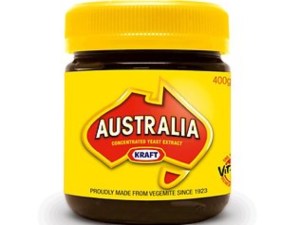
Anti-craft messaging aside, this rebranding of a national and well-recognized food/beverage product as the nation itself is not without precedent. Kraft did it with Vegemite in 2012 to mark the spread’s 89th year.

Australia Vegemite

Vegemite’s 2012 Australia rebrand

So what might “Australia” Vegemite tell us about “America” Budweiser?

First, Vegemite arguably is an Australian food icon so powerful and recognizable that it can (and does) stand in for the nation in both national and international contexts. Does Budweiser hold such status in the United States and abroad?

Second, even in the case of “Australia” Vegemite, the rebranding stunt appears to have incited as much consumer ire as it did pallid press coverage. Consumers and journalists alike were unimpressed and saw the ads for what they were: marketing.

So why does it matter that a brand like Budweiser is taking on a national identity, even if temporarily?

In the case of Vegemite, consumer skepticism and disdain were rooted in the contradiction that Vegemite was owned by US companies, Kraft and Phillip Morris. Similar sentiments abound in the press coverage of Budweiser’s “America,” as journalists ask how American Budweiser can be when it was purchased in 2008 by beer mega-giant InBev, based in Belgium and Brazil. Both of these rebrandings (and resistance to them) tell a complicated story about the increasing blurriness of national identities within a condensed global economy.

Furthermore, “Australia” Vegemite was perhaps an attempt to emphasize the spread’s patriotic connections at a moment when they appeared to be fading. In his research on Vegemite during “the Asian Century,” Juan Sanin predicts the imminent decline of Vegemite’s symbolic power as Australia further integrates with Asia, politically, economically, and culturally.

And so perhaps this summer is not going be the most American of a generation, but one whose Americanness is the most uncertain in a generation. It’s a season when the likes of Budweiser and Donald Trump encapsulate the anxieties and hopes for what our future might hold.

Why I Support Render, Feminist Food Writing & Activism

As its website states, Render: Feminist Food & Culture Quarterly works in every issue “to spotlight all the badass women who are making waves within the persistently male-dominated food industry.” These efforts “to smash the patriarchy in the food industry” are important for all of us, as readers, thinkers, and eaters.

It’s why I renewed my subscription and contributed to Render’s Kickstarter, which ends on May 4. I’m not part of the Render team, but as pledges currently fall short of their goal, I wanted to offer these few words of support, because these issues have been top of mind for me lately.

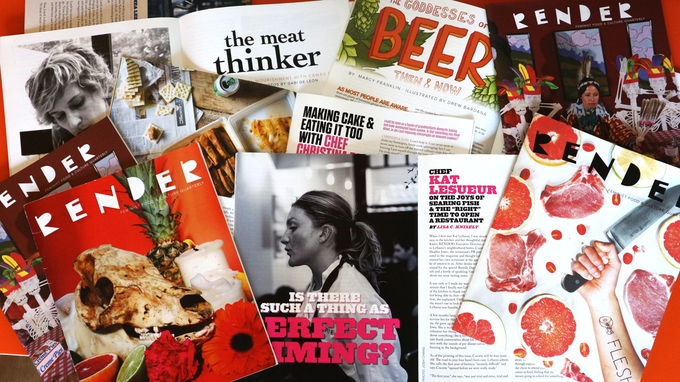
Render Year 1

A vivid rendering of the journal’s first year of issues. Photo from Render Kickstarter page.

In our course, “Food and Gender in U.S. Popular Culture,” my students and I have discussed and pondered, sighed and screamed about not only the continual under-representation of women in the food industry and the media that covers it, but also about how the icon of the celebrity chef — constructed as white, male, and straight — is a cultural figure that by its very nature subordinates every other identity within the industry.

This particular construction of the celebrity chef is why we continue to ask, “Why are there no great female chefs?” and “Where are the female gods of food?” It’s why incidences of sexual harassment, assault, and abuse are not just prevalent, but a cultural norm in many restaurants, in the front and back of the house.

Furthermore, the construction and constant repetition of “the celebrity chef” as white, male, and straight not only affects the status and opportunities of female chefs, but fuels and sustains the subornation of everyone in the industry — especially workers lower on the restaurant labor hierarchy, where their experiences are shaped by not only gender, but also race, ethnicity, citizenship status, sexuality, and social class. These discussions about the world’s greatest chefs and the role of women are in a direct (but less discussed) conversation with, for example, Teófilo Reyes, Chris Benner, and Saru Jayaraman’s call to “end Jim Crow in America’s restaurants.”

Render is one of the most productive and revolutionary sites for these discussions, stories, and potential paths to a more just food industry. If that’s not enough to make you immediately subscribe and support their Kickstarter underway, here are four more reasons:

They print citations. Render’s content not only draws from experience, interviews, ethnography, and authors’ imagination, but also from rich secondary literatures. And they cite them. And I love it.

Their art is on point. Even in an age when printing journals and periodocals is increasingly cost prohibitive and rare, every issue of Render has been full of witty typography, illustrations, photography, and art. I’m still seriously considering framing the cover of the first issue — and the recent sneak preview of issue #5 on history inspires similar feelings.

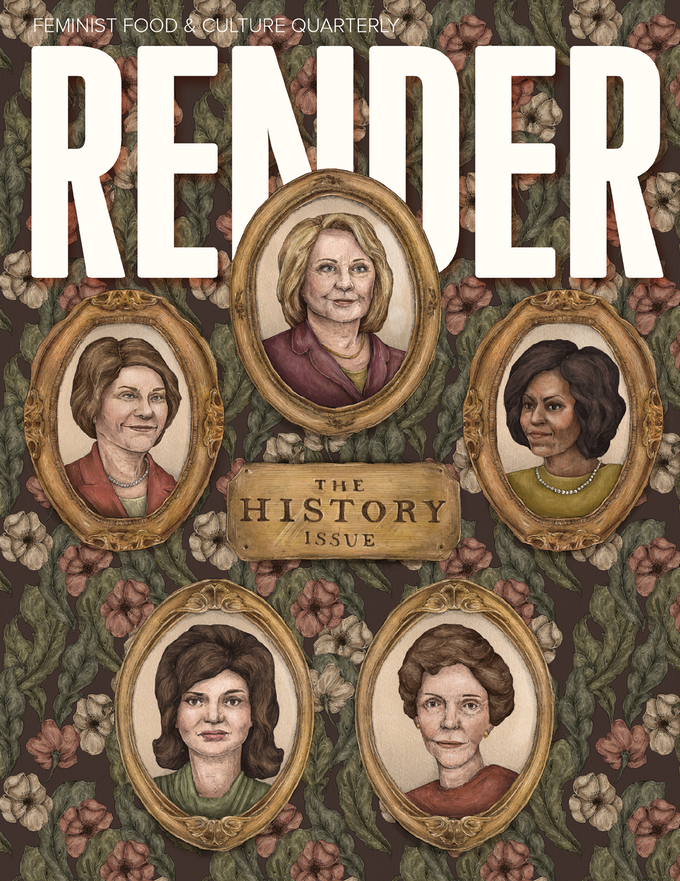
Render Cover 5

A sneak peak of Issue #5: HISTORY.

They pay their contributors. While unable to in their first year of publication, Render has made the commitment to pay contributors, yet another way that the editorial team puts their money where their mouth is.

Issue #5 looks and sounds incredible. Here’s a sneak peak from the editors:

The HISTORY issue will feature interviews with Momofuku’s Beverage Director Jordan Salcito, and Portland, OR Pastry Chef Eve Kuttemann, of Trifecta Tavern and the Sage Hen Dessert Pop-Up. This issue will also include feature-length articles about Lydia Marie Child, a cookbook author and abolitionist; Lillian Tingle, a revolutionary home economics teacher who helped change Portland’s food industry forever; and Ida Freund, a science professor who taught the periodic table of the elements with the power of baked goods. Our cover story, Feed Us, FLOTUS!, digs into the food legacies of our current and former First Ladies, including Michelle Obama, Laura Bush, Hillary Clinton, Nancy Reagan, and Jackie Kennedy. Recipes are included, of course!

I hope you’ll join me in supporting feminist food writing and activism.

Taste the Spirit of Montana at Lilac in Billings

Update: Like too many treasured local restaurants, Lilac was forced to close during the Covid-19 pandemic. I leave this story up as a tribute to a special restaurant, its chef and owner Jeremy Engebretson, its staff, and the food scene of my hometown. // 

Montana is called “the last best place,” a long-cherished refrain that applies now more than ever to its increasingly innovative restaurants. Here, beneath an expansive blue sky, diners can taste not just Montana ingredients, but the spirit of the state itself. Expressed through food, the Montana identity values the land and landscape, direct communication and unpretentiousness, affordability and responsibility, and an ironclad sense of character—in ingredients, dishes, cooking technique, and people too.

Nestled in the Yellowstone River Valley beneath breathtaking sandstone cliffs, Billings is the largest city in the state, where I grew up, and home to Lilac, a restaurant that has earned local adoration and national accolades. Just a year after it opened in 2012, Lilac was the only restaurant in the state to be included in OpenTable’s Diners’ Choice Award for the Top 100 American Fare Restaurants in the United States.

It’s not hard to see how Lilac, and its proprietor and chef Jeremy Engebretson, embody the best of what could be called “Montana cuisine.”

In an intimate space on historic Montana Avenue, glossy black and pearly white subway tiles frame a short row of bar seating that anchors the restaurant space and provides an unobstructed view directly into the kitchen. There is no haughty mystery, overwrought culinary performance, or exclusivity here. Rather, Engebretson describes Lilac’s food on the restaurant website with prose so succinct and assertive it would cause Ernest Hemingway to sit up and take notice: “Local from scratch responsible cooking. Modern American food with a fistful of approachability.”

Engebretson is a local himself, who grew up in Montana and neighboring Wyoming, and knew since childhood he wanted to be a chef. He also knew that many restaurants fail not because of bad chefs, cooking, or food, but bad business skills. To fortify his future, Engebretson earned a degree in business with a focus on information systems and a minor in economics, while honing his culinary chops in restaurant kitchens.

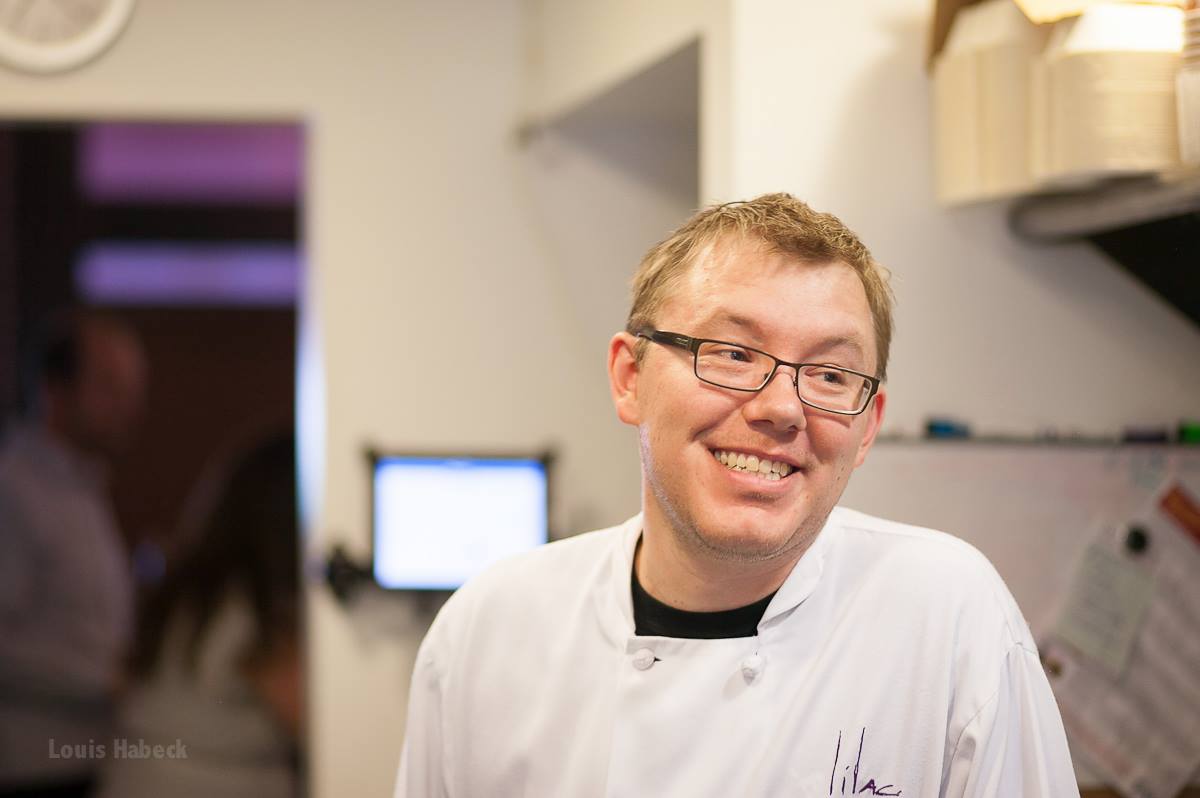
Now in his early thirties, boyish looks veil a refreshing directness, a sardonic sense of humor, and an unflinching vision for good food.

Jeremy

Crafting Food and a Staff, from Scratch and with Soul

Even given the area’s short growing season and challenging kinks in local distribution chains, Strolling of the Heifers Locavore Index ranks Montana among the top 10 states nationally for commitment to locally produced food. From late spring to mid fall, 90% of Lilac’s produce comes from within the state.

Engebretson describes local as “a regional idea here,” one that is more “Montana-centric than Montana-only.” It’s a point of view that brings together ingredients like Montana-grown grains, produce, cheese, and honey with wild boar from Denver or Texas and seafood from around the world.

Expanding upon these ingredients and flavors, Lilac’s menu builds from the ground up. This year’s winter menu ranges from duck fat fingerling potatoes to octopus fritti, wild boar chop with cornbread dressing, roasted parsnip, and a maple mustard glaze to a vegetarian option: grilled zucchini naan with gruyere, ancho aioli, and micro salad.

From-scratch cooking and “not cutting corners” are foundational for Engebretson. “The sense of accomplishment you get from seeing a project from beginning to end is a soulful experience,” he says. “I believe that to be true in those who do things like make pasta, as well as those who make things such as tables.”

And Lilac’s staff makes pasta. Lots of it. Every day. They also butcher whole animals, grind beef, concoct salad dressings, craft ice creams, and bake bread—all this (and more) in a kitchen so tiny no casual observer could imagine such an enthusiastically artisan stream of activity pouring from it.

These close quarters foster a team as comfortable in the back of the house as the front. Along with the kitchen crew, servers make gnocchi, manage the pantry, and prep desserts, like the sticky toffee pudding, which has been on the menu since Lilac opened with every component made in-house. Ask any server, chef, or cook at Lilac where an ingredient comes from, how a dish is prepared, or what they’d recommend, and they can tell you, because they know. They’ve done it.

United by a craft-oriented perspective and cross-training experience, staff members at Lilac are deeply committed to good food, alongside other creative pursuits. Proud of the restaurant’s very low employee turnover, Engebretson boasts, “Our employees are dancers, painters, musicians, parents…and they work at a really great place.” In such ways, Engebretson’s definition of responsible food prioritizes issues of food labor. “I find it hypocritical,” he says, “when you are in an industry where the whole goal is to make someone happy, and you’re living a miserable life.”

Developing a Montana-Centric, Modern American Menu

Describing the restaurant’s style as modern American cooking, Engebretson declares, “Modern and approachability go hand in hand…I believe it should not be a privilege to eat something someone made for you from real ingredients. I very much wanted to serve people fantastic, interesting, ‘almost fancy’ food, and serve it at a price point that everyone could eat it.”

Concurrently, Engebretson says that modern American cooking means embracing all “the ingredients, technologies, and ideas that speak to us today.” The style can be expressed through hydrocolloids, sous vide cooking, and inventive flavor profiles, as well as interpretations of classic dishes, traditional techniques, and a heritage focus. Engebretson values heirloom ingredients and asserts a gastronomic inquisitiveness that extends deep into the past.

The sundry qualities of the restaurant’s culinary style manifest as rich variation on the menu, which is purposefully small, eclectic, and nimble.

The cheeseburger with bacon jam and house-made fries is a constant on the menu, and Engebretson insists it always will be. A complement to such an iconic and accessible mainstay, menu development is always buzzing at Lilac and growing increasingly collaborative, birthed from meetings of the entire staff. Engebretson describes these events with a ripe enthusiasm: “We have a bunch of us sitting around, tasting wine with the Internet open and a copy of The Flavor Bible and just talking about what we taste and it just goes from there.”

Development starts from untold points of inspiration, including staff travel and exploration, as well as ruminations like, “Green garlic is in season. We can get that for four weeks. Let’s make a dish out of that.” Or, “I read about how the yolk of a 63 degree egg is supposed to be sublime. Let’s make a dish focused on that.” Or, “This wine is really briny, reminds me of an olive or a tapenade. What’s a dish that would work well with this olive note?”

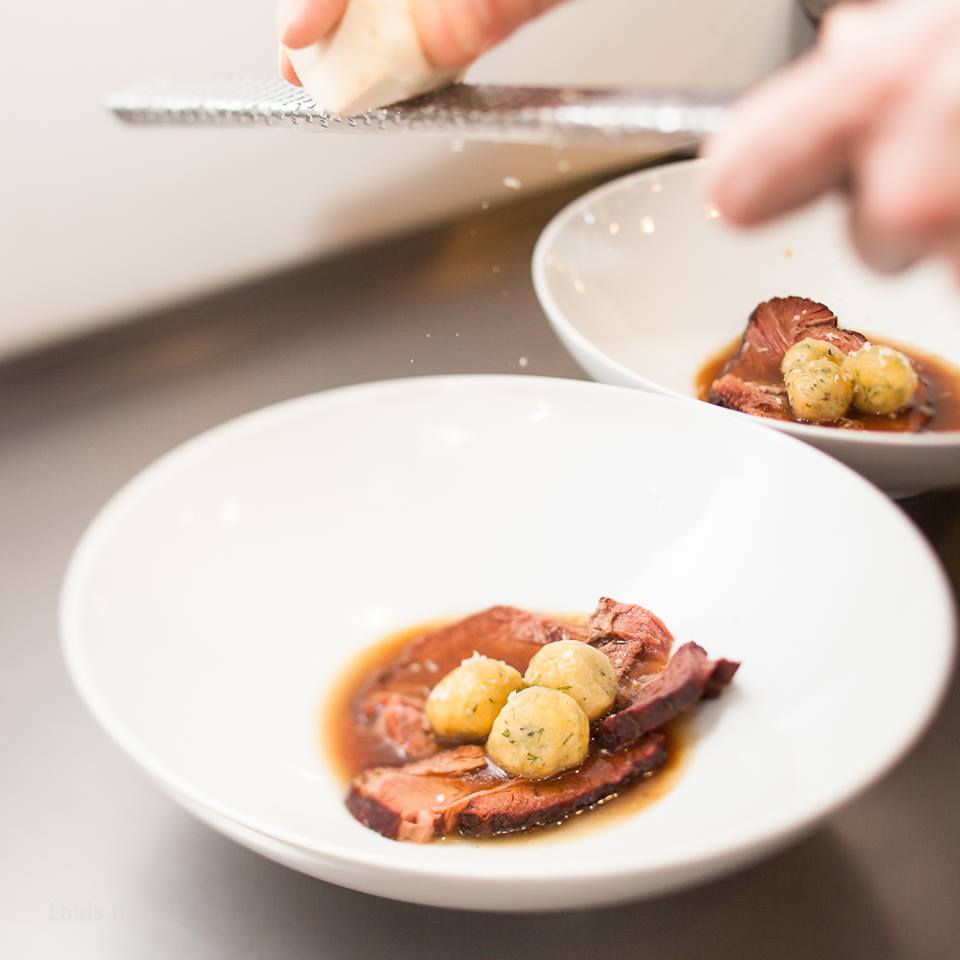
Brisket.jpg

Above, smoked brisket from a special beer pairing menu, which Engebretson describes: “This was a straight up smoked then braised Montana brisket. We made the jus out of ALMOST burning carrots, then deglazing that with beef stock and the braising liquid from the brisket. The dumplings are a kind of pate au choux infused with cheddar, and the horseradish was just fresh grated horseradish right over the top. I remember making that jus really dark and caramel flavored, again ALMOST burned, and infused with garlic/bay traditional stuff. And then we clarified it.”

Serving up dishes with a uniquely Montana sensibility, Lilac constantly and consistently aspires to a dualistic set of goals that unite innovation, frankness, and a strong sense of purpose.

In one vein, the restaurant endeavors to “blend a myriad of philosophies” at a democratic price point. Engebretson cares deeply about quality ingredients, ethical and responsible sourcing, and from-scratch, craft cooking. He is also concerned for health and dedicated to art, soul, joy, and balance.

“At the same time,” Engebretson pragmatically states, “one can say we’re just trying to serve people dinner. The variance of those two elements encapsulates the challenge of the restaurant, on every level. I’m OK with that.”


Lilac
2515 Montana Avenue, Billings MT
406.969.4959


All photos are courtesy of Louis Habeck, a Montana artist and the official photographer for Lilac.

Social Media Lessons for Aspiring Public Intellectuals

I attended several fascinating panels at the 2016 OAH Annual Meeting here in Providence this past weekend (check out #OAH2016 on Twitter), and also learned some very helpful lessons from “Navigating Social Media and Traditional Media,” organized and chaired by seasoned publicist Sarah Russo. (She also shared her social media knowledge at least year’s OAH on the panel, “Media Training for Historians,” which you can watch here).

Her three fellow panelists at this year’s conference were:

Here are the top five things I learned about how academics can be accessible public intellectuals on social media, which is increasingly becoming part and parcel of what we do:


I also chatted with Sarah after the panel, and she made the interesting point that we don’t necessarily need to talk about “Twitter for academics” as a separate subculture of social media with its own norms and strategies. It’s more about how we as people and professionals across various fields use social media to connect, communicate, and transform.

If you’d like to learn more about what was covered during this session, my live tweet feed is below. (Any errors of interpretation or transcription are my own.) And I’d love to hear, what are your tips and strategies for using social media?

Top Image Credit: Katherine Hysmith

Teaching Food Studies, Cookbooks & Writing

How do cookbooks speak? What stories do they tell—and whose? What do cookbooks reveal about power and how it operates? How do cookbooks communicate and construct gender?

These are some of the questions my students and I have pondered lately in our course “Food and Gender in U.S. Popular Culture” at Brown University. For our first assignment, students analyzed how cookbooks prescribe and transgress conventional gender roles. A uniquely interdisciplinary field, food studies scholarship often employs various methods, but the close reading of cookbooks is one method that approaches universality.

I’m working with a thoughtful and engaged group of 20 mostly first- and second-year students. While most had read and used cookbooks for cooking, few had previously considered them as elements of popular culture, as valuable historical evidence, as prescriptive literature that shape notions of gender, or as sources in which the so-often-silenced voices of women and people of color can be heard.

In an effort to fully scaffold and support our work with cookbooks, we first did some reading. While there are many incredible texts I could have assigned, we read from:

Then we had to learn how to read recipes, particularly how their formulas, language, instructions, meaning, and function have changed over time. A selection of apple pie recipes from the eighteenth century to the present (see slideshow below) helped us make sense of how changes in technology, cooking skill and embodied knowledge, and mass market consumption patterns influenced the way recipes were communicated and prepared.

This slideshow requires JavaScript.

Armed with this new knowledge, we then set to work applying it further in a cookbook workshop. On a snowy Providence morning, I boarded the bus with about twenty-five cookbooks from my personal collection in tow. While I severely underestimated how much of an isometric bicep workout it would be to carry the books to and from the bus stop, it paid off to bring these topics to life in the classroom.

I brought in an eclectic mobile library of texts including James Beard’s sentimentally illustrated The Fireside Cook Book (1949), Julia Child’s beloved The French Chef Cookbook (1968), an autographed copy of Jean Nidetch’s Weight Watchers Program Cookbook (1973), a selection of convenience cookbooks from Betty Crocker and McCall’s, promotional cookbooks from General Foods and Ball, and even The Marlboro Cook Like a Man Cookbook, which comes laminated, born ready to take up a hot and greasy residency outdoors by the grill.

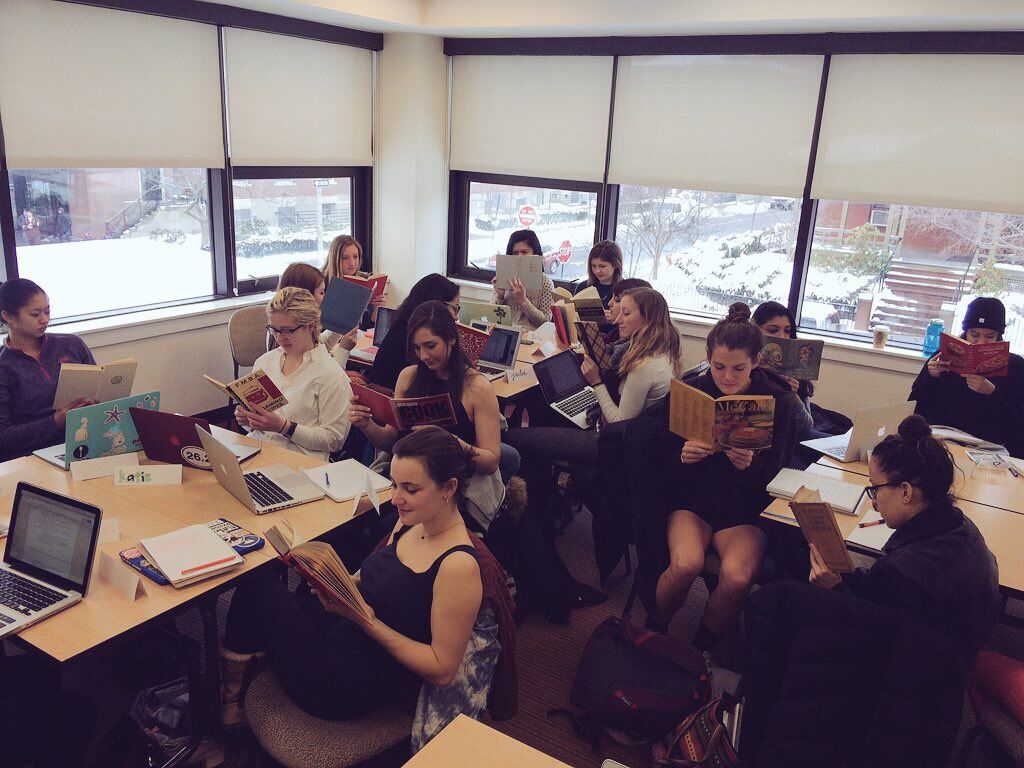
Food + Gender Class - Cookbook Workshop

Students in “Food and Gender in U.S. Popular Culture” at Brown University during a cookbook workshop. Photo by Emily Contois, posted with student permission. 

While I encouraged students to read their cookbooks cover-to-cover before writing their essays, we spent about 15 minutes perusing our texts during the workshop and pondered a set of questions, which we then discussed as a group, such as:

  • What type of cookbook is it? (e.g. community compilation, specialty e.g. “just desserts,” celebrity chef author, etc.)
  • Who is the author of this cookbook? What do we know about him/her?
  • When was this cookbook published? What about that time period might be relevant?
  • Who is the intended readership for this cookbook? (e.g. novice versus experienced cook) What do we know (and not know) about the cookbook’s readers?
  • What ingredients, forms of measurement, technology, utensils, and techniques are called for in the recipes? How do these relate to the historical context? What might they also tell us about the assumed cooking ability and class status of the cookbook’s readership?
  • What does this cookbook tell us about the identity of the author and of the reader? How are gender roles prescribed and transgressed within the text? What does this cookbook tell us about other categories of identity like race, ethnicity, class, religion, and/or region?

My aim with the workshop was twofold: to help students understand how cookbooks “speak” and to identify what within cookbooks makes for effective sources of evidence—from prescriptive narrative to individual ingredients, techniques, and equipment—considering all along the way how these texts construct gender.

Armed with our compelling evidence, we next set out to craft equally compelling arguments. Motivated by the writing conventions of professional food writing, we’re practicing the skill of “pitching” as an early step in our writing process. Taking the pitch guidelines from Render: Feminist Food and Culture Quarterly and Eater as points of inspiration, students crafted pitches using the guidelines below, which we then discussed in 15-minute one-on-one office hour appointments:

  • What is the title and author of the cookbook you’ll be writing about?
  • Why are you interested to write about this cookbook? What’s your angle? What perspective will you bring to this text?
  • How does gender come into play in your cookbook?
  • What is your draft thesis? What will you argue? What evidence will you use from your cookbook? What is your unique take on this cookbook?
  • What course readings do you anticipate using to contextualize, historicize, frame, complicate, and/or support your reading of the cookbook?

Whether due to this sequential scaffolding or the sheer brilliance of the students I’m fortunate to work with each week (or perhaps a combination of the two), I had the pleasure of reading twenty genuinely intriguing essays with well-crafted theses that examined topics like: how Betty Crocker’s Cookbook for Boys and Girls (1957) not only prescribed gender roles, but sought to secure lifelong consumers of convenience food products; how Pierre Franey’s The New York Times 60-Minute Gourmet (1979) established the figure of the gourmand on exclusionary terms along the lines of gender, race, and class; how Martha Stewart’s Entertaining (1982) reimagines and perpetuates a Victorian domestic ideology; and how Elizabeth E. Lea’s Domestic Cookery, Useful Receipts, and Hints to Young Housekeepers (1859) is predicated upon historically specific, essentialized notions of femininity that assume cooking skill and knowledge to be inherent to women. 

I quite literally can’t wait to read what these young food scholars write next.


CFP: Critical Nutrition Studies Panel at ASFS 2016

If you engage critical nutrition studies in your work, my colleague Stephanie Maroney (PhD Candidate, Cultural Studies, UC Davis) and I welcome your submissions to join our panel submission to the ASFS/AFHVS/CAFS conference to be held June 22-26, 2016 in Toronto.

The panel, “Interrogating Nutritionism and Dietary Science in Novel Food Products,” examines the discursive effects of the marketing for two novel food products: FairLife Milk (Emily) and the Human Food Bar (Stephanie). The panel explores the relationship between the cultural values that animate these advertising messages and the scientific research that supports these products.


Drawing from the field of Science and Technology Studies, critical studies of nutrition recognize and reveal the ways that scientific knowledge is not neutral, natural, or objective – rather, it is co-constituted alongside sociocultural values and beliefs. By looking at the history and politics of dietary advice, we can better explain and account for the assumptions that structure contemporary nutrition science and the marketing claims used to differentiate products in our health-centric culture.

We seek additional papers that critically examine the role of nutrition science in the production of knowledge and narratives. Papers that explore a specific food item and/or food marketing are especially welcomed, but not required. Charlotte Biltekoff, Associate Professor of American Studies and Food Science & Technology at UC Davis and author of Eating Right in America: the Cultural Politics of Food and Health, will provide commentary and moderate the session.

Email abstract (title + 250 words) and short bio (100 words) to Stephanie (srmaroney [at] ucdavis.edu) and Emily (emily_contois [at] brown.edu) by Wednesday, January 27.

6 New Food Studies Books That I Can Stomach Reading

When I was preparing for my preliminary exams, I had a friend warn me that after reading 300-or-so texts, the thought of picking up another book would make me feel physically ill. While there were certainly moments when I literally couldn’t stand reading another word, I’m pleased to share that I not only passed my exams in November, but am still hungry for more.

I’ve been browsing the food studies titles that have come out recently, and here are six that I’m looking forward to reading:

1. Kate Cairns and Josée Johnston. Food and Femininity. New York: Bloomsbury Academic (September 2015).

2. Kima Cargill. The Psychology of Overeating: Food and the Culture of Consumerism. New York: Bloomsbury Academic (October 2015).

3. Deborah A. Harris and Patti Giuffre. Taking the Heat: Women Chefs and Gender Inequality in the Professional Kitchen. New Brunswick, New Jersey: Rutgers University Press (May 2015).

4. Julie Parsons. Gender, Class, Food: Families, Bodies, Health. Palsgrave Macmillan. (September 2015).

5. Toni Tipton-Martin. The Jemima Code: Two Centuries of African American Cookbooks. Austin: University of Texas Press. (October 2015).

6. Katharina Vester. A Taste of Power: Food and American Identities. Berkeley: UC Press. (October 2015).

What new food studies books are on your to-read list?

And if you’re looking for some inspiration, bookmark the Association for the Study of Food and Society’s “New Books in Food Studies” page, which lists books that have been submitted for review in Food, Culture & Society.


Savoring Gotham in Edward Hopper Paintings + A Star Wars Rant

I’m thrilled to have written a few entries in the newly published Savoring Gotham: A Food Lover’s Companion to New York City, edited by Andrew F. Smith. As I flip through this tome—brimming with stories about Gotham’s notable foods and beverages, restaurants and bars, historical sites and events, cuisines, personalities, and brands from throughout the city’s five boroughs—one of my favorite entries so far is on Edward Hopper’s paintings of New York City food life.

Depicting at times eerily quiet moments with minimal action between human figures, Hopper’s subject matter often drew from urban sites of quotidian America life, including food spaces—modest restaurants, automats, coffee shops, and chop suey joints—which Hopper frequented often with his wife. His paintings use these culinary locales, however, to express the common themes that mark his body of work: anonymity, anxiety, pensiveness, loneliness, and isolation.

Hopper’s work critiques the promises of an abundant, fast-paced, cosmopolitan life in the big city, showing how the easy availability of food and drink at all times of the day and night might not lead to contentment. Instead, it fosters dissatisfaction and unease. More isn’t better. More might, in fact, be less…and lonely.

While others have commented on the lack of food in Hopper’s food spaces, I wonder if one of the things we can take from his paintings in our present food moment is the darkness that ensues when food loses its abilities to foster commensality, community, and joy. Some will argue that knowing where your food comes from and making ethical purchases fosters human connection that ripples throughout the food chain. Others might assert that mindfully engaging in the rituals of eating can make even a solitary cup of coffee a rich and meaningful experience.

I’m not sure what Hopper would make of our alternative food movement, but his critique is most poignant in Nighthawks (1942), a painting that despite its largely pessimistic view of “America” has become an icon of American popular culture, frequently featured, adapted, and parodied. Some maintain Hopper’s tone of loneliness and elusive satiation, while others depart from it:

In the wake of the massively anticipated Star Wars: The Force Awakens, I am also intrigued by the many Star Wars parodies of Nighthawks, including this one:

Nighthawks_StarWars

Although fortifying themselves with beverages, our favorite characters sit alone, even when seated side-by-side. Looking straight ahead or with eyes cast downward, they stare off blankly. They are tired, perhaps remorseful, a bit defeated.

Here begins my rant.

This Hopper parody perfectly encapsulates what has happened to Star Wars in the tumultuous flood of promotion that has accompanied Episode VII. I’ll preface this by saying I’m a pretty liberal scholar of American consumer culture; I don’t find it wholly controlling, stagnating, base, or constraining. I find it possesses limitless potential for consumers to make their own meaning in ways that exceed false consciousness or the intentions of big business and advertising. I’ll also add that I’m no Star Wars aficionado or geek. I didn’t grow up with it. I didn’t even see any of the films until college. That said, even I am shocked and appalled by the overt and never-ending commodification of this installment of the franchise. In acts of sinister synergy, there are product tie-ins for everything from toys and novelty items (which at least make sense) to:

  • coffee creamer (Boba Fet’s flavor is Italian sweet crème. I’m not joking.)
  • sandwiches (Didn’t you know lightsabers and footlongs pair perfectly?)
  • ice cream (Yup, you can choose between the dark side and the light side flavors.)
  • batteries (Duracell’s tie-in is actually mentioned on the film’s website for positively promoting imagination.)
  • laptop (It allows you to “unleash your inner sith” with a red backlit keyboard.)
  • jewelry (Because every kiss begins with Darth.)
  • make up (Verbatim promo for Star Wars Limited Edition Super Sizer Mascara: “Dare to discover your dark side with 400% more corner-to-corner volume.)

This might actually be the dark side, people. Look at the painting! This sort of madness murders R2-D2 and C-3PO, leaving them askew in the snow, discarded scraps of metal. This over-commodification exhausts a mythology based a long time ago in a galaxy far, far away that has come to be devastatingly meaningful to fans. Star Wars as a film empire may prove timeless and universal, but its marketing potential ought to exercise some reasonable limits. To be surrounded at every turn by movie tie-ins is not to pay tribute to a significant part of cinematic culture, but to be well and truly alone, numbly staring into our drinks à la Hopper. 


Announcing the Graduate Journal of Food Studies 2.2 & the End of Food Puns

Look no further for groundbreaking scholarship, throught-provking book reviews, and stirring art from emerging scholars. The third issue of the Graduate Journal of Food Studies (volume 2, no. 2) is now live online.

The issue starts with editor-in-chief Carla Cevasco’s insightful letter, “I hate food puns,” which urges us all to refrain from foodie figurative language in an effort to bolster the intellectual foundations and popular perceptions of our field. Gone be the “food fights,” “seats at the table,” and, sigh, “food for thought.” I especially love her assertion that these phrases make food studies appear “fun” and approachable, but in the end, “Food studies should not be easy.” Our topics may be quotidian. That’s what makes them powerful and meaningful. Our conferences and events may consider eating and drinking primary. That’s experiential learning and intellectual embodiment, purposeful commensality and mindful consumption. Our work speaks to students and the public. That’s how our field will continue to expand and survive. Food studies is not a passing fad nor a field of inquiry with soft edges. As Carla argues so well, its acuity deserves accurate representation and rigorous contemplation.

This third issue of the journal answers this call, as it takes food seriously with articles addressing the 2013 EU meat scandal through analysis of the spectacular, the emergence of budget cookbooks in America, and Vermont’s alternative food systems. The issue also includes gorgeous meat landscape paintings by Eliza Murphy and ten book reviews, including mine (!) of A Cultural History of Food History in the Modern Age, edited by Amy Bentley with eleven essays from a truly all-star cast of contributors. It and this entire issue are worthy of a deep read, and we, the editorial team, hope you enjoy it.