Author: Emily Contois

How to Write a Statement of Purpose

When I applied to PhD programs, I didn’t really find the advice I was seeking for how to write a statement of purpose, so I wrote this post in the hope that it might help someone in a similar position.  Folks will tell you that your statement of purpose is the most important part of your PhD application and they’re right. While your transcripts might demonstrate your past academic success and your letters of recommendation can speak volumes, especially if written by significant scholars in your field, no piece of your application package can make more of an impact than your statement. It is your opportunity to clearly and succinctly discuss your past and future research goals in an interesting way. From this document (as well as the rest of your application package), an admissions committee will decide if you are the right “fit” for their program. While you’re determining which programs are the right fit for you, you can simultaneously put pen to paper (or fingers to keyboard) and start the first of many drafts …

4 Steps to Find the Right PhD Program for You, Food Studies or Otherwise

So, you’ve decided to pursue a PhD. You’ve heard the advice, “If there’s anything else you want to do, seriously, do that instead” and pondered it thoroughly. You’ve searched your soul, talked it over with those important to you in your life, and have confirmed beyond a shadow of a doubt that an academic life is the career that will fulfill you. Congratulations on getting to this point. Now, you have to apply to programs and get accepted, which in this academic and economic climate, isn’t easy. While there’s no magic number for how many programs you ought to apply to, somewhere in the 6 to 12 range works well. You might have already gone through some of these steps, but here is a four-step plan to finding the right PhD program for you and increasing your chance of acceptance—with some special advice thrown in for food studies students. Step 1: Choose the right field of study. For some, this first step will be a no brainer. You might get a PhD in the same …

Food and Matriarchy in “Sons of Anarchy”

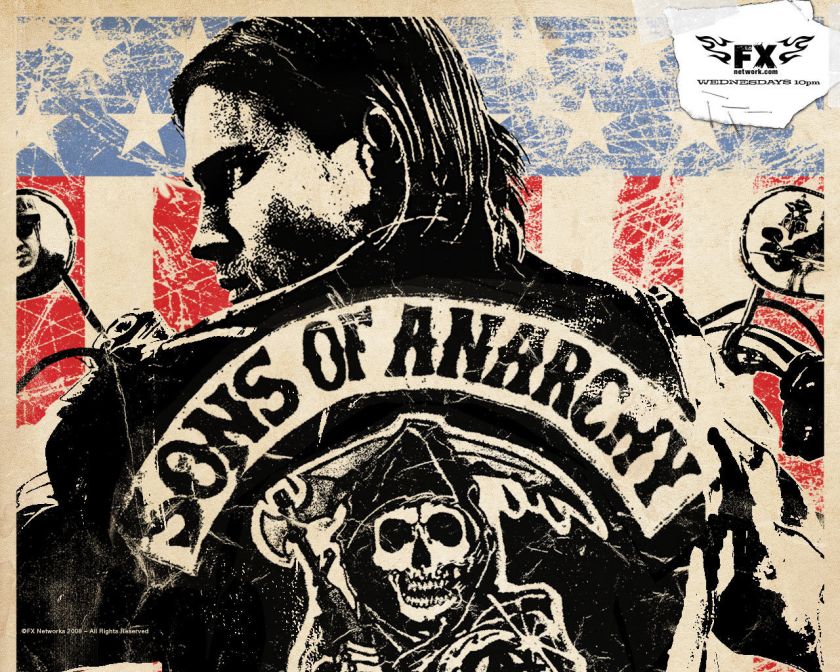
While Charlie Hunnam‘s handsome face and blonde locks are reason enough for anyone to be watching Sons of Anarchy with unwavering interest, after watching the first five seasons, I’m struck by the way that scenes of eating express the harmony or discontent of the motorcycle club (MC). As its members seek to protect the interests of their aptly named hometown of Charming, California, as well as their families and their MC brothers against drugs, violence, and general discord, three meals mark the club’s progress. Notably, the presence and absence of these meals reflect the changing power and influence of the family matriarch, Gemma Teller-Morrow (Katey Sagal). Spoiler alert: If you haven’t yet watched the show and think you might like to, I’d suggest getting up to speed before reading further. Family is a strong theme throughout Sons of Anarchy, as members of the club treat one another as brothers, willing to fight, kill, and die to protect one another and those dear to them. While these family-like ties grow apparent throughout the first episodes, they are also made …

Labor Day Laments and the Masculine Glory of Groom’s Cakes

It’s Labor Day, which signals summer’s approaching end, as well as a seasonally-based, social ban on white clothing. [Though really, when are white pants ever a good idea?] This holiday also tends to mark the end of the summer wedding season, but I’ve got weddings and cakes on the brain because I’m head-over-heels in love with Cherry Levin’s recent article, “He Can Have his Cake and We Will Eat It Too: The Role of the Groom’ Cake in Southeastern Louisiana Wedding Receptions,” in Digest: A Journal of Foodways and Culture.  While I’m not sure the claim that the groom’s cake tradition is waining everywhere but in the south holds water, I greatly enjoyed the author’s analysis of the groom’s cake as a masculine detail within the otherwise ultra-feminine affair that is most big, white weddings. Levin comments upon the “visual and symbolic relationship” between the wedding cake—or “bride’s cake” if you prefer—as its towering tiers and feminine, frosted details mirror the bride herself, adorned with lace, tulle, and beading. Furthermore, she contends that “celebratory cakes communicate important messages …

Defining American Food in ‘The Saturday Evening Post All-American Cookbook’

If you ever want to strike up a passionate food debate, just toss out the the question, “What is American food?” While you’ll hear the unenlightened decree with disdain that the United States has no food culture, the answer is far more nuanced. Like jazz and blues music, some argue that barbecue is a unique American cultural food product, one that loudly communicates a multiethnic history and both local and regional identity. Others will insist that the food traditions of New England form the culinary roots of American cuisine.[1] Others will point to McDonalds and other fast food joints known for selling burgers and fries as quintessentially American in taste, presentation, and capitalistic expansionism.[2] Still others will argue that the continually simmering melting pot[3] of American citizens ensures that all food served within U.S. borders in some way represents, absorbs, and communicates American food culture. These disparate points of view are portrayed in different ways in The Saturday Evening Post All-American Cookbook. Published in 1976, filled with reproductions of the Post’s covers and advertisements, and made up …

Take Me Out to the Ballgame…and Eat 33,000 Hot Dogs

We all know how the 1908 song “Take Me Out to the Ball Game” goes, and if you care about food, the line “buy me some peanuts and cracker jack” will likely stand out. I didn’t grow up a baseball fan (or football or basketball for that matter), as my Australian father instead schooled us on tennis, cycling, and Formula 1 racing. My husband, on the other hand, has loved the game of baseball all his life. And so this summer, on a road trip that covered a bit more than 5,000 miles, we stopped to see five ball games in five cities, meaning I consumed more baseball — and more ballpark concessions — than in my entire life up to this point.

Browsing the Grocery Store Butterscape: A Photo Essay

Unlike most foodies, I more often than not zoom through my trips at the grocery store like a crazed contestant on Supermarket Sweep. Last month in Montana, however, while spending a few relaxing days at home with my family, I allowed myself to get lost in the imagery of the butter aisle. [Imagine my husband’s embarrassed horror as I snapped all these photos. Perhaps it was a suitable and just revenge for taking me to Walmart.] Bizarre iPhone photography sessions aside, butter bears a complicated identity in the grocery store. In her poetic ode to butter Margaret Visser (a Canadian Michael Pollan predecessor) explains the “butter mystique,” proclaiming it simple, rich, golden, and pure, as well as “irreproachable, unique, and irreplaceable” among both ancient and modern foodstuffs (chapter 3 in Much Depends on Dinner, 1986). While beyond reproach for some, heart health recommendations often shun butter for its saturated fat content, instead championing margarine, a food product with its own mixed identity, including everything from a healthy alternative to a butter impostor, a Frankenstein-esque food terror created in a lab …

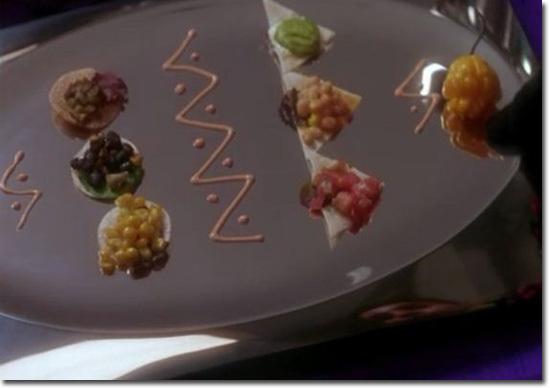
Haute Taco Bell & Underground Rat Burgers: Food as Political Metaphor in ‘Demolition Man’

When my husband and I moved into our new apartment in Providence one month ago, we split our time between building Ikea furniture during a minor heat wave (which was somewhat-less-than-delightful) and watching movies that ranged from beloved cult classic (Slap Shot with 1977 Paul Newman) to awesomely bad. It is from this latter set that today’s subject matter emerges: the sci-fi action flick, Demolition Man (1993). In this film, directed by Marco Brambilla, hero John Spartan (Sylvester Stallone, ripped and a bit punch drunk as per usual) battles his violent nemesis, Simon Phoenix (Wesley Snipes, donning a startlingly blonde flat top). After Spartan’s attempt to arrest Phoenix goes wrong in 1996, both men are sentenced to be cryogenically frozen, which, yes, was somehow already a best practice in prisons before the end of the twentieth century. When Phoenix escapes at his parole hearing and starts a killing spree in the post-apocolyptic future of 2032, the current police force has no choice but to turn to Spartan for help.

Why Writing an Academic Blog Makes Me Feel Like Sally Field: 5 Things I’ve Learned in My First Year

In a post last year, the London School of Economics and Political Science’s Impact of Social Sciences blog argued that blogging is one of the best things that academics can do. As I celebrate my first year of blogging this month, I would have to agree. While I have a long way to go, here are five things I’ve learned while blogging on my thoughts and research in food studies, nutrition, and public health.

Graduate Food Studies Programs: A List

I began keeping this list of graduate food studies program after a fascinating roundtable discussion titled, “Masters Programs in Food Studies, Food Systems, and Food Policy,” at the 2013 joint meeting of the Association for the Study of Food and Society and the Agriculture, Food & Human Values Society at Michigan State University in East Lansing. During this discussion, the directors of seven graduate food programs debated the key issues emerging in graduate food education. They were also asked by a session attendee to summarize each program’s distinguishing features, which I’ve summarized here in the hopes it might prove useful for any students currently weighing their options for graduate study in food. Note: I’ve been keeping this list as current as possible. Last update: January 25, 2019 Boston University, MLA in Gastronomy  Location: Boston, MA Program Director: Megan Elias, Ph.D. Program History: Co-founded in the 1990s by Julia Child & Jacques Pépin Strengths / Specialities: Focus on the liberal arts; can include culinary arts & wine study; online, blended and in-person courses; in large, research university Follow: Twitter (@GastronomyatBU); …

The Ins & Outs, Highs & Lows of Public Health Nutrition

A few weeks ago, I had a student email me to learn more about what it’s like to work in the field of public health nutrition. Since my last day with Kaiser Permanente is this Friday, I’ll soon be ending this stage of my professional public health career, moving toward a life in academia where I aspire to bridge the worlds of the liberal arts and public health. While my day-to-day life will focus less on applied public health practice, answering this student’s questions made me all the more proud of the work, perspective, and contributions of public health.  What follows is some of our Q&A.

The Agony and the Ecstasy—of Eating

While we often think of eating as a supremely pleasurable experience, there are also times when eating brings pain, which can be wholly unwelcome or fully enjoyed. Rozin defines pain as “a negative experienced state that we avoid and that we try to reduce or eliminate” (1999: 5). And yet, there are numerous instances in which we do not avoid, reduce, or eliminate painful eating experiences. From late night, drive-through tacos that leave one’s stomach a bit unsettled to that ready-to-burst feeling that follows overeating at Thanksgiving dinner, we often fail to prevent moderately painful gastric distress. Pain can also find us by accident, as we cry out when a momentary mishap of the teeth causes us to bite down on our inner cheek or when we burn our tongues on a hot soup that we are too eager to try. Specific foods, however, bring a pain that at least some of us welcome and seek on purpose. Spicy foods set our tongues and lips on fire. Pickled foods render the inside of our mouths …

Food & Fat as Metaphor in ‘The Middlesteins’

When NPR included Jami Attenberg’s The Middlesteins as a foodie summer read, I had forgotten that it was on my request list at the library. When it came available with its fast food inspired red and yellow cover, I excitedly carried it home, ready to dig in. Late last year, Hannah Rosefield wrote an incredibly insightful piece on the use of obesity as metaphor in not only The Middlesteins, but also in Michael Kimball’s Big Ray, Heft by Liz Moore, and Erin Lange’s young adult novel Butter. She argues: An obese body is never, any longer, just an obese body, in life or in fiction, but an embodiment of an epidemic, an image of our society…It is true that although 70 percent of American adults are overweight or obese, a relatively small number is super obese. But these novels show Ray, Arthur, Butter, and Edie not at one end of a continuum, but as existing in a separate category, divided from their “normal” friends and family. We see the various societal factors that contribute to obesity, but …

Toned Tummies & Bloated Bellies: Activia Yogurt & Gendered Digestion

In Experiencing Food and the Senses, one of the core courses in the MLA in Gastronomy program at BU, we shine a spotlight on all of the senses, especially those so often left out of scholarly inquiry. I continued my study of gender, coupling it with exploration of digestion as portrayed in advertising for Activia yogurt. Here is a taste from “Toned Tummies and Bloated Bellies: Activia Yogurt and Gendered Digestion.” Often considered a taboo topic in the United States, the promotion and popularity of Activia, a probiotic yogurt launched in the U.S. in 2006, has in some ways opened a dialogue among American women on regularity, digestion, and constipation. In studies exploring gendered perceptions of food, yogurt is often considered a feminine comestible (Kiefer et al. 2005; Jensen & Holm 1999). Furthermore, Dannon states that they have only ever marketed their products to women (Sandler, 2008). As a functional food sold to appease digestive ills, the female-focused marketing of Activia provides a new and different opportunity to analyze gender in Dannon’s marketing tactics. Activia’s probiotic market prowess takes place within …

Boston Strong: What’s Dunkin’ Donuts Got To Do With It?

When I blogged last week, I was obviously looking forward to the Boston Marathon—to the day when nearly the entire city hits the streets to cheer on the elite and the amateur, as we all celebrate Patriots’ Day on our feet. Instead, last week was a harrowing series of days for Bostonians, every one of us linked in someway to someone who was hurt or killed. As a city we mourned, but by Friday, as a city we celebrated—though those lost will never be forgotten. During the manhunt that transpired on Friday, April 19, it was reported by BuzzFeed and The Huffington Post that Dunkin’ Donuts stores remained open during the city-wide lockdown to serve police officers and first responders. Having researched Dunkin’ Donuts coffee culture previously and powerfully aware of its meaning to Bostonians, I quickly wrote an essay on the open doors of Dunkin’ Donuts, serving as a caffeine and sugar-fueled heart of the city. I’m very excited that it was published this morning by The Inquisitive Eater, an online food journal published …