Author: Emily Contois

CHAViC 2015: An Insane Asylum, on a Dinner Plate?

Five glorious days musing over fascinating eighteenth and nineteenth-century objects and texts, multiple delectable meals (including one cooked over the hearth at Old Sturbridge Village!), stimulating conversation, and umpteen new friendships and professional food studies connections. All this was the result of my incredible experience at the American Antiquarian Society in the Center for Historic American Visual Culture (CHAViC) seminar, “Culinary Culture: The Politics of American Foodways, 1765-1900,” which was organized and orchestrated by Nan Wolverton, CHAViC Director, and led by Nancy Siegel, Professor of Art History, Towson University. The week’s lectures, material, and discussions were oriented around a case study assignment, in which each student chose one of seven artifacts/objects/ephemera (pictured below) to discuss in greater detail. With such exciting options, we all agonized over which object to choose and spent the week working through questions grounded in the lives of the objects themselves, like: Where did it come from? Who held it, used it, or owned it? Where did it live? Was it meant to be private or public? Why was it made? What is its message? What does it tell …
Eating for Muscle: What This Foodie Has Learned From Her Powerlifter Husband

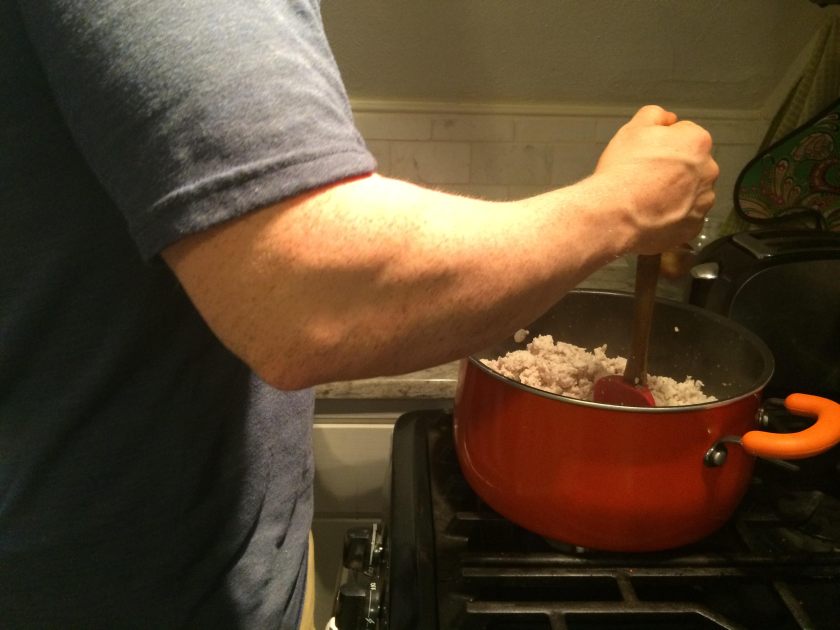
I don’t usually identify myself as a foodie, but compared to my husband—who trains hard and subsists upon protein shakes and loads of lean meat—you might as well consider me one. The diets of strength athletes, bodybuilders, powerlifters, and the like are a gustatory world away from what most people eat, what the USDA would recommend, or what any food enthusiast would sanction. In my most recent Zester post, I pondered the nearly twelve years I’ve spent cooking and eating alongside this man I love, as he’s worked toward his athletic goals, boiling it down to six food rules that muscle building folks follow: Protein is king. Food is fuel. Taste is secondary. Cheating is part of the plan. Bulk is good. Meal prep is not cooking. I’d love to hear your thoughts on this dearly dedicated, but distinctly anti-foodie subculture. And as a silly supplement, here are some shots of my husband’s weekly meal prep (and his lifting). Photo credits: Emily Contois, 2015

#phdlife: On Adopting a Dog & How Instagram Makes Academic Life Easier

We adopted an adorable pit bull rescue on Valentine’s Day and it was only a matter of time before she somehow made her way onto the blog. And believe it or not, bringing her into our family has helped my academic life in myriad ways, from minimizing study-induced back pain and loneliness to off-time full of unlimited cuddles and kisses. Adopting a pup also means I’ve discovered the world of pet-friendly Instagram (if you’re the sort that follows doggies, she’s @raven_puppie), which is one of the most supportive communities I have ever been part of and one that makes the copious use of emojis that I’ve been desiring from everyone in my normal life. (Seriously. Why aren’t you guys texting me multi-colored hearts and snoozy faces all the time?) These doggie mamas and papas are ever present to tell my girl that she’s cute and special and that she’s part of a caring community of dogs and owners committed to animal kindness for all breeds and types, especially hers, one so often maligned. And so, as I’ve engaged for the first time with an …

Conference Save the Date: Graduate Association for Food Studies, October ’15

Mark those calendars people! The Future of Food Studies, the first conference of the Graduate Association for Food Studies, will be held 23-25 October 2015, at Harvard University in Cambridge, Massachusetts. The conference will include a keynote talk by Fabio Parasecoli, food studies scholar and coordinator of the Food Studies program at the New School, as well as graduate student panels that you won’t want to miss. The conference theme directly engages the complexity of food studies’ status as a “burgeoning” field, as so many characterize it. With roots in the late 1980s, food studies has consistently gathered steam—as well as a critical mass of articles, dedicated monographs, professional organizations, journals, and university programs—with more opportunities surfacing each year. The conference will engage these changes, actively pondering what the future of the discipline holds, conceptually, methodologically, and publicly. Graduate students are encouraged to submit paper and panel proposals by the CFP deadline of 31 May 2015. And I welcome everyone interested in the future of food studies to mark your calendars and plan to join us at Harvard in October. Please share widely—including this snazzy save …

Ann Seranne: America’s #1 Expert on Blender Cookery

In 1961, Ann Seranne and Eileen Gaden, both former Gourmet Magazine editors, published The Blender Cookbook to rave reviews. Not at all gimmicky, the cookbook was heralded by Craig Claiborne as an inspired, functional, and welcome resource, penned by “probably the world’s leading authorities on what a blender will and will not do.” Not only the nation’s top blender cookery expert, Seranne wrote more than two dozen cookbooks, published mostly in the 1960s and 1970s. A woman with dual passions, she also bred champion Yorkshire terriers—who ate very well and loved garlic. Her name also buzzed among foodies a few years ago, when Amanda Hesser revived Seranne’s 1966 rib roast of beef recipe in a “recipe redux” in the New York Times. Read more about this lesser known cookbook author in my most recent Zester piece, “How the Blender Was Elevated to a Kitchen Staple,” and enjoy this image gallery, an ode to the humble blender.  

Nika Hazelton’s 1963 Rules for Judging Cookbooks

People buy cookbooks for a variety of reasons. They look pretty on the bookshelf. Even better on the coffee table, depending on the book, a topic of culinary conspicuous consumption I discussed in a round table at the 2013 Cookbook Conference. Cookbooks can be fun to collect. Cookbooks represent skills we hope to learn or wish to have, meals we desire to eat, people we aspire to be. For well known cookbook author and writer Nika (Standen) Hazelton, however, there was only one reason to buy a cookbook: to cook from it, damn it. [I’m not sure if she would approve of such phrasing, but one of her cookbooks was titled, I Cook As I Please, so I might not be too far off.] The author of thirty cookbooks and innumerable articles for major food newspapers and magazines, Hazelton had little patience for those who purchased cookbooks as “escapist literature.” Instead, in a 1963 article in the New York Times, she laid out in black and white exactly how one ought to judge if a cookbook was up to snuff. Check …

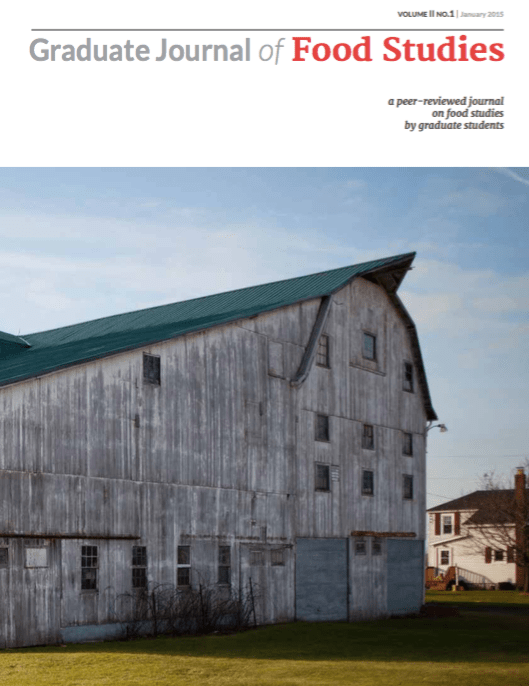
Announcing the Graduate Journal of Food Studies 2.1

In case you haven’t heard, the second issue of the Graduate Journal of Food Studies came out last week online and will soon make its way to the mailboxes of subscribing members! I was thrilled to have my research on trophy kitchens included in the first issue and the second issue is just as thoughtful and beautifully designed, featuring four original research articles, multiple reviews on some of the most recent food studies publications, and stellar photography. So with this news, what should you do next? Read the Graduate Journal of Food Studies winter 2015 issue (2.1). Join the Graduate Association for Food Studies, an organization that connects graduate students with an interest in food studies, promotes their work, and provides myriad resources for publishing, networking, presenting at conferences, and more. It’ll be the best $20 you ever spend. Submit a proposal for the first edition of the biennial Graduate Food Studies Conference to be held in Boston, 23-25 October 2015. The submission deadline is 31 May 2015. Submit an article, book review, or photography/art for consideration for the Journal’s third edition. The …

Post #100: Advice for Vegemite Virgins on Australia Day

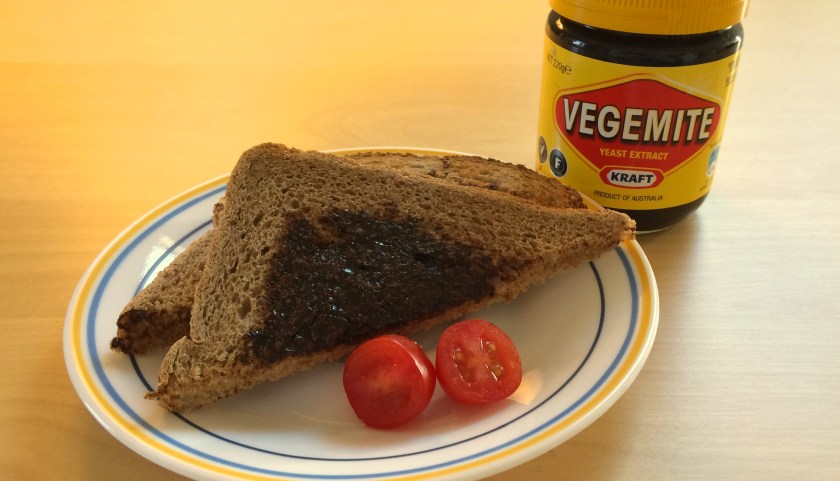
My latest Zester piece encourages Americans to try Vegemite today, on Australia Day,  the country’s national holiday celebrating the day in 1788 when Captain Arthur Phillip and the First Fleet of eleven convict ships from Great Britain arrived at Sydney Cove. If you try it, you’ll be joining a venerated group of non-Aussies who have taken the challenge: Oprah tried it during her shows in Sydney, on the steps of the Opera House, no less, and claimed to like it. Brad Pitt also tried it, sticking his finger boldly into the jar and tasting it from his fingertip, with diplomatic consideration for its flavor.  President Barack Obama confessed in 2011 to then-Australian Prime Minister Julia Gillard that he found the spread “horrible,” disappointing Vegemite lovers—including me. Niall Horan of One Direction echoed this sentiment in 2012 when he tasted Vegemite toast live on Australian television only to spit it out and later share on Twitter, ”Can clearly say vegemite is horrible!” Ten American children tasted Vegemite for the first time in a popular video that circulated last year. Vegemite failed to …

To Eat, Or Not To Eat, Kangaroo

Inspired by my recent travels to Australia, my most recent Zester Daily piece explores kangaroo meat and its consumption in Australia and abroad. Low fat, high protein, eco-friendly, affordable, and served at top Aussie restaurants, kangaroo meat consumption appears to be on the rise, but not in Australia. For the most part, Australians are wary to eat kangaroo, as the animal has figured prominently in the nation’s history, identity, and popular culture. For more, please take a sec to read the article—and here’s an impromptu gallery of kangaroo imagery as thanks.

Trader Vic: The Man, The Legend, The Gastronomic Enigma

When I first acquired a copy of Trader Vic’s Book of Food and Drink (1946), I knew it wouldn’t be long before I wrote something about it. There’s a tangible excitement to owning a first edition of something, anything. In an age of inescapable planned obsolescence, it’s mildly thrilling to own something, anything from before 1950. As I flipped through the book’s pages, I couldn’t help but be interested in its recipes for mai tais and mojitos—drinks now so unquestionably commonplace that it’s hard to imagine a time when they once cast an allure of intriguing exoticism. Drinks aside, however, it was Trader Vic himself—San Francisco native, Victor Bergeron Jr.—who enthralled and beguiled me. My most recent piece for Zester Daily, “Trader Vic: The Apostle of Rum and Ready-Prepared Foods,” explores the fact and myth, truth and legend of the man who purportedly invented the mai tai, popularized the margarita and nachos, and introduced American diners to morel mushrooms, sunflower seeds and green peppercorns before most restaurants included them on the menu. Adored by diners and well-respected by food writers and restaurant critics, Bergeron did all this …

5 Posts to Celebrate National Coffee Day

It’s National Coffee Day, which means you can pick up freebies to sip that will pair perfectly with these coffee themed posts: 1. American Coffee Culture in 1872: So Different from Today? Start off with a taste of coffee history and ponder how coffee transformed into the United States’ national beverage and a potent patriotic symbol. 2. Dunkin’ Donuts Coffee: A Site and Source of Bostonian Identity Even During a Lockdown. During the manhunt and city-wide lockdown following the Boston Marathon bombing, Dunkin’ Donuts remained open to serve police officers and first responders. This piece, published in The Inquisitive Eater, considers the deep meaning of the coffee chain in New England. 3. The Dunkin’ Donuts Origin Story: A Meaningful Beginning. This piece covers a brief history of one of New England’s favorite chains. 4. When Theory Actually Applies: Starbucks is to Bourdieu as Dunkin’ Donuts is to Foucault. This post conducts a comparative cultural analysis of the two chains, which are I argue align with opposing theoretical frameworks. 5. Imagining the Dunkin’ Donuts Identity Outside of New England. Considering coffee consumption as an expression of identity, …

Vegemite: Advertising and the Making of an Australian Icon

Chocolate-like in appearance but with a flavor like nothing else on earth, the yeast extract spread Vegemite is essentially synonymous with Australia. Hired by the ambitious Fred Walker to create a copy of the British spread, Marmite (which coincidentally has an adorable Twitter feed), food scientist Cyril Callister developed Vegemite in 1923. Based on a mutual interest in developing a processed cheese with a longer shelf life, Walker joined forces with James Kraft, forming the Kraft Walker Cheese Company in 1926, whose Melbourne factory and head offices are pictured below (image 1). High in B vitamins during an historical moment when vitamins themselves were a new scientific phenomenon, Vegemite was from the beginning marketed by the Fred Walker Company as nutritious, particularly for children. For example, a Vegemite advertisement from the 1920s assured consumers that “there is no food richer in vitamins than Vegemite” and a point of sale advertisement from the 1930s emphasized the spread’s nutritional content and the themes of vitality, health, and childhood (image 2). Despite its vitamin content, consumers were initially slow to …

The Food Heritage, Hybridity & Locality Conference

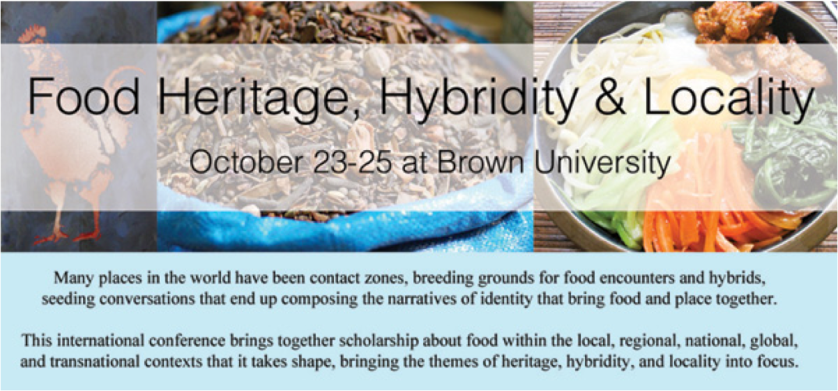
The Food Heritage, Hybridity, and Locality Conference, which was held here at Brown University, October 23-25, 2014. This exciting event brought together presenters from throughout the United States and across the globe, whose work explores the intersection of tradition, place, and the dynamic processes of fusion, melding, and hybridization that create new food phenomena. Providence, Rhode Island proved a unique host for this conference—and not just because it has earned top rankings among Travel and Leisure’s America’s favorite food cities. As the conference call for papers states so well, waves of immigration have fashioned Rhode Island food culture into a unique hybrid, marked by such gastronomic wonders as Rhode Island chowder, whose clear broth defies both cream and tomato-based conventions, and Johnnycakes, cornmeal cakes whose origins are a complex combination of worlds both old and new. Even local, homegrown favorites fuse the conference’s themes of heritage, hybridity, and locality, like Del’s lemonade, a lemon flavored Italian ice sold from distinctive mobile units that first set up shop in Cranston, Rhode Island in 1948, and coffee milk, a beverage very deservedly Rhode Island’s state drink. Rhode Island provides additional examples, including the chow …

Food History Roundup: 6 Posts on 1950s Convenience Cuisine

Titled, “Beef Fizz and Other Strange Recipes from the ’50s-’60s,” my most recent Zester Daily article was published last week, a short piece dedicated to my fascination with mid-century cuisine. Over the summer, I have indulged my mid-century penchant by picking up dozens of vintage cookbooks, including six more just last night! These cookbooks are mostly from the 1950s and 1960s, but some earlier in the twentieth century (I can’t wait to write about The Sunny Side of Life Book, published by the Kellogg Company in 1934) and some later (like Betty Crocker’s Family Dinners In a Hurry, whose fourteenth printing ran in 1980). It’s a borderline reckless hobby, adding more books to an already large collection of literature, public health texts, and food studies books, but I’m sure it’ll provide inspiration for many a blog post. I’ve already written a bit on convenience food, packaged-food cuisine, my love of Laura Shapiro’s Something from the Oven, and what food and cooking meant mid-century. Here’s a quick roundup in roughly chronologically historical order: 1. Wartime, Memorial Day … & Kraft American Cheese? Focusing on …

3 Posts to Toast Julia Child’s 102nd Birthday

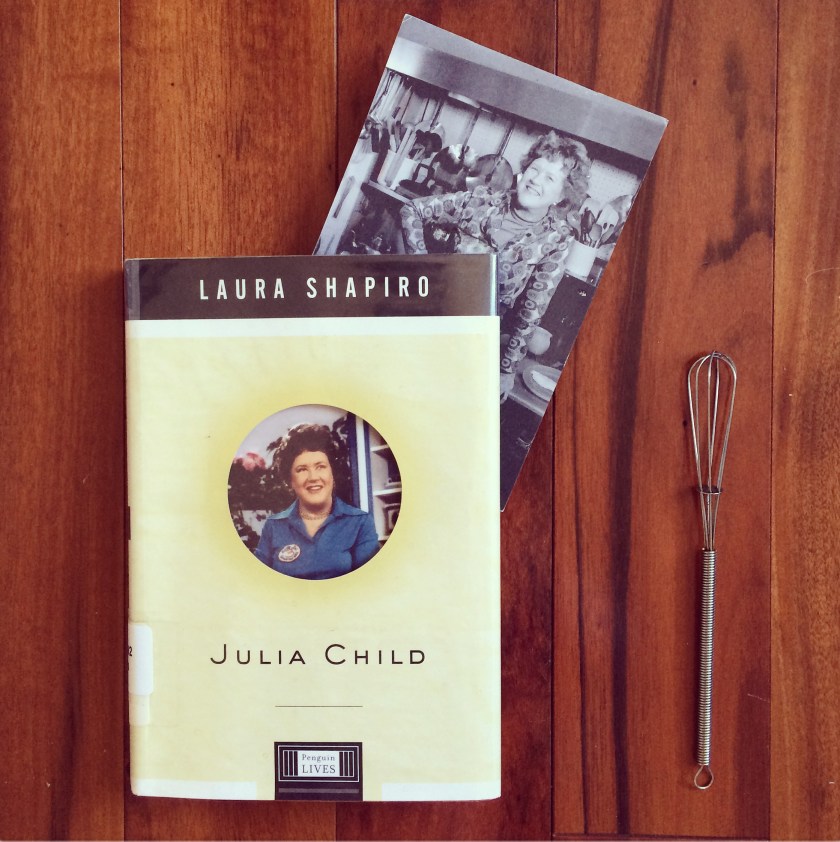
Today would have been Julia Child’s 102nd birthday and with her towering height, booming voice, vivacious personality, and insatiable appetite for food, eating, cooking, and learning new things, we can be sure she would have celebrated in style. As a graduate of the MLA in Gastronomy Program at Boston University—the program co-founded by Julia Child with Jacques Pépin to secure a place in higher education for the serious study of food—I share with my BU colleagues a borderline-cult-like love for all things Julia. I celebrated this week by finally reading Laura Shapiro’s biography of Julia Child, which is a petite book that perfectly captures the stages of Julia Child’s life, love, and career. I also spent some time writing an article for Zester Daily, comparing Julia’s advice on wine to that offered by other cookbooks published around the same time. One of the things I most love about Julia is how she expects, encourages, and supports readers to rise to the challenge, whether it be mastering French cuisine or perfectly pairing wines. Like any good teacher, her own love for learning …