I’ve been feeling stuck and overall less positive and optimistic about my writing lately. I’m working on book proposal revisions after a difficult 2024 stalled my progress, which I wrote about here. This personal history, mindset, and feelings made me avoid my writing, something I hadn’t experienced before. Even when I’d get my butt in the chair and open the document ready to work, I’d quickly start to feel overwhelmed and frustrated. Many writing experts recommend academic writing progress in 15-minute increments, but I literally couldn’t work on the project for much longer than that. Once considered by my friends to be a “prolific” writer, this state of affairs was distressing and depressing to me.
While not the case every year, this spring break was a week when I could dedicate all my time to writing and restoration. In the hope that they’re useful to others, here’s a recap of the strategies I used to reset my writing outlook and get back into my writing.
Plan to Succeed
Seek Support. I’d been trying for weeks to write on my own and it wasn’t working. I needed support beyond myself, so I scheduled a coaching session with Dr. Katie Linder ahead of my writing week. We processed what felt challenging and made a plan for moving forward.
Visualize Writing Going Well. From my “think like an athlete” research for the book project itself, I’d learned about the power of positive visualization. So, ahead of the spring break week, I visualized the writing going well, rather than how it had been going lately. In my mind’s eye, I saw myself sitting at my laptop typing and scribbling outlines on paper. The sun shined in the window. I was surrounded by an aura of positivity, competence, and gentle determination.
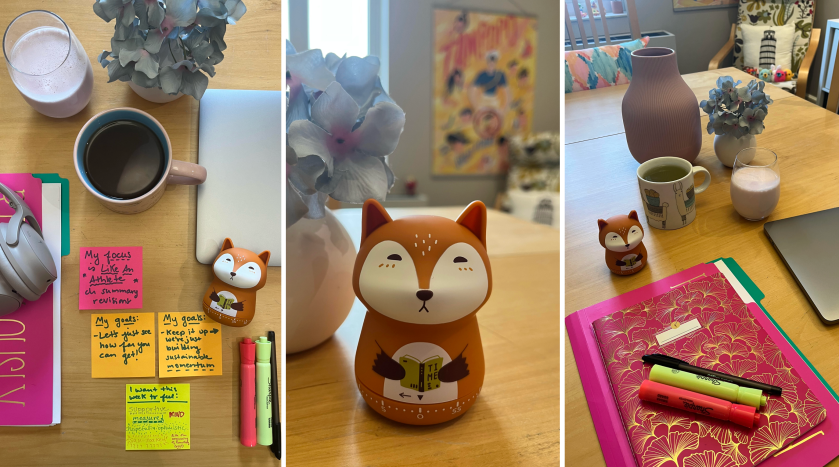
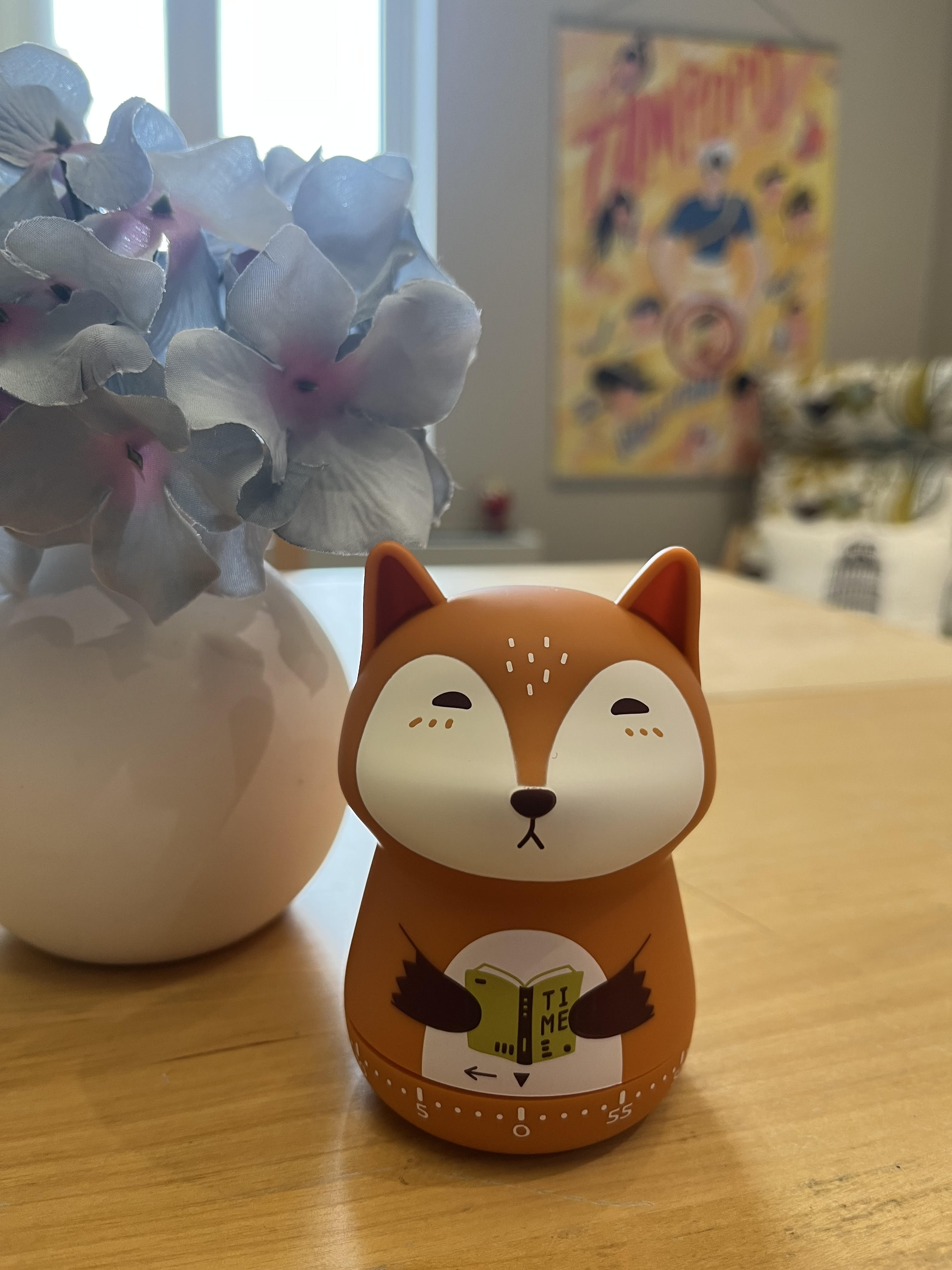
Purchase Supplies You Need. Since I was struggling to work for more than 10 or 15 minutes before frustration and overwhelm set in, I purchased ahead of time these cute animal timers. I don’t typically practice the pomodoro technique but felt how useful it can be. I also love cute things, so the fact that it was a darling fox made it more effective. I started with a 30-minute session and was relieved how quickly and easily the time passed. After the first day, I didn’t need my foxy timer anymore, but it was still fun to use.

Set Writing Goals Differently
I approached the week intentionally and in a kinder, softer way than I usually treat myself and my work. My focus was on revising the chapter summaries for my current book proposal. I didn’t set a quantified goal of minutes or words or writing sessions completed. I didn’t even set baseline or stretch goals for how many chapter summaries I hoped to touch or complete. Instead, I had just two general process goals for the week. I wrote them on sticky notes the day before I started writing:
- Let’s just see how far you can get!
- We’re just building sustainable momentum; keep it up!
I also brainstormed how I wanted the week to feel. I’m normally a taskmaster, but this time around I needed to be gentler, and it helped!

Design Pleasant Writing Rituals
I know some writers can get knotted up in rituals and never get to the actual writing. But a combination of physical, mental, nutritional, and social rituals helped me write during a week when I needed a boost. My five days looked like this:
Manage & Care for Life Logistics. The first part of my day was the same as always. I woke up at 6:00 am along with my husband and dog. When I was revising my dissertation into my first book, I used to start writing right away, isolating myself from my family. Now, I drink coffee, check email, and chat with my husband while he eats breakfast. Then I kiss him goodbye for the day, leaving to walk the pup for two miles so she can be a calm writing buddy upon our return.
Facilitate a Writerly Mood with Podcasts. I always listen to podcasts while we walk. For this week, I didn’t listen to the news and higher ed content I typically listen to, which in our present moment is mostly anxiety-inducing. Instead, I listened to shows that put me in an optimistic and writerly mood. Favorites include:
- Drafting the Past: A Podcast on the Craft of Writing History with Kate Carpenter
- Academic Writing Amplified with Cathy Mazak
- Your Words Unleashed with Leslie Wang
Prepare Body and Mind to Write. Joli Jensen, author of Write No Matter What and one of my dearest writing mentors, advises us to reserve exercise for our “B” or “C time,” reserving our brightest “A time” for writing. For many writers, A time is as early as possible in the day. I typically do that, but for this week, I wanted to help my body and mind feel as well as possible, to remove one more potential barrier so I could write easily.
For me that meant I’d foam roll for 5-10 minutes after walking the dog. Then I did 15-20 minutes of gentle yoga, focusing on stretching, deep breathing, and affirmations, rather than an intense workout, which I did later in the day. This quiet, non-sweaty movement centered and calmed me. I also made a cup of tea and poured a Greek yogurt shake into a glass to sip while I worked, so I wasn’t hungry or parched.
Emphasize Space & Aesthetic Motivation, If It Helps. To jumpstart my writing, I wrote in a different space than usual, working from my home office rather than my work one. I set up my writing area aesthetically and a little differently everyday to lift my spirits—a different vase, a new mug, a candle to brighten the cloudy day, and so on.

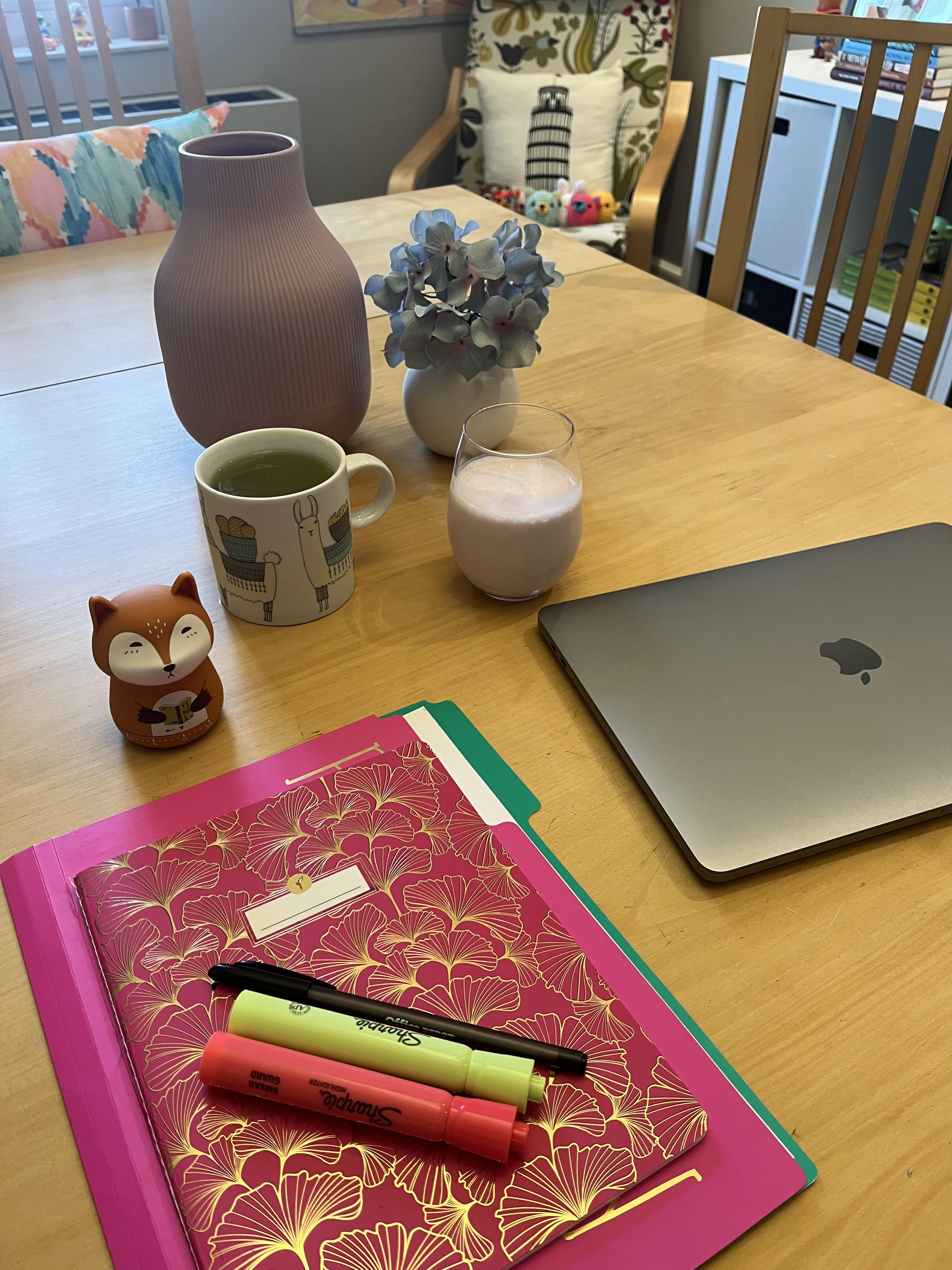


Use social media. When I was a PhD student, I wrote about how taking and sharing photos of my academic work helped the process:
Call it a waste of time, but taking a pretty photo of the day’s [academic work] makes the effort a bit easier, a tad lighter, and a modicum more fun, especially when the going gets tough. It transforms this scholarly labor from the world of work to the land of aesthetics, amateur art, and gentle hobby-making. … It creates an object of inspiration and commemoration of my own design. It makes my intellectual effort material, legible, translatable and worthy of a stranger’s gaze, if not their understanding. A mental trick? Decidedly millennial silliness? Perhaps. But if it works, why not go with it?
I still feel this way, so every day, I’d snap a photo before I sat down to write. After my writing session, I’d share the photo on my Instagram account. Writing can be such solitary labor. Through their likes and comments, it was nice to feel supported by friends, fellow academic writers, and students.
Utilize All Your Materials
Start Fresh Documents. Part of what made me feel stuck with this writing was the fact that all the chapter summaries lived in a Word doc draft of the book proposal and in an overview document, both of which I’d revised multiple times already. I felt like a failure whenever I opened these documents and struggled to make good progress, so I started fresh. I copied and pasted each chapter summary into their own document and saved them on my desktop in a nice orderly line that grew with each passing day.
Work with Hard Copies, Pen & Paper. In addition to Word docs up on my laptop, I also printed everything out. I annotated the hard copies with colored highlighters when it helped me to find key points and themes across the chapters. I also mapped out the structure of each chapter by hand with paper and pen before writing it into the Word doc.
After Writing, Rest & Restore
It’s of course a privilege, but dedicated writing days like this make it possible to reward yourself with free time to rest and restore after the work of writing is complete. I was lucky that once I was done with my writing (60-120 minutes each day), I could (mostly) enjoy the rest of the day however I wanted.
*****
These strategies helped me to revise everything but the introduction summary of the proposal! Sure, every summary still needs further revision before I share them with my agents for another round of feedback. But this week helped me to cultivate the three things I desperately needed: an optimistic outlook on my writing (generally) and this project (specifically), positive momentum, and enough progress that I now know what to do next.
I hope sharing these struggles and strategies is helpful. I’m wishing everyone writing that feels good!
 Emily Contois
This is inspiring!
LikeLiked by 1 person